This article was produced with AI assistance. Editorial standards apply — see our About editorial process.
What is the skeleton vs Socrates meme?
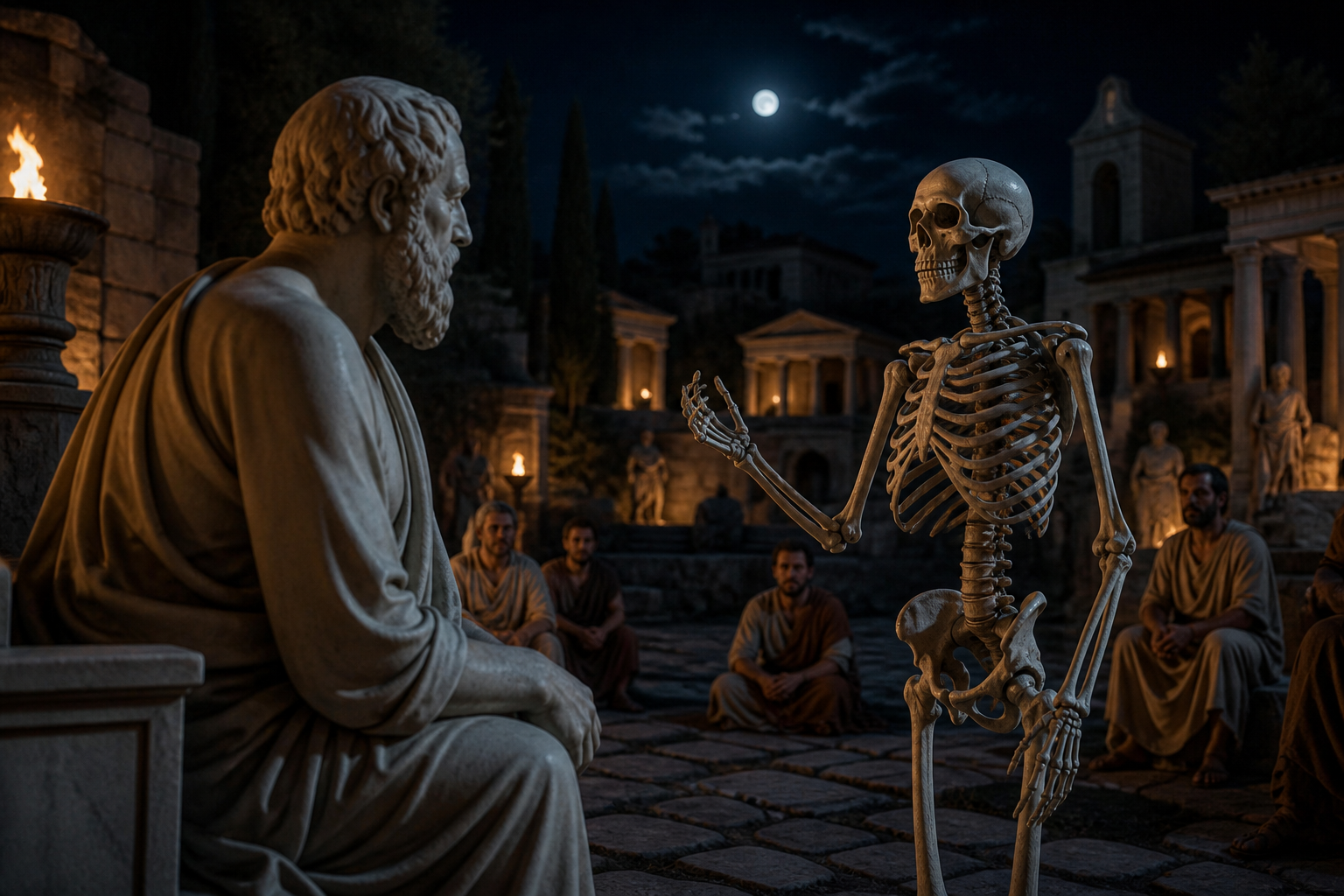
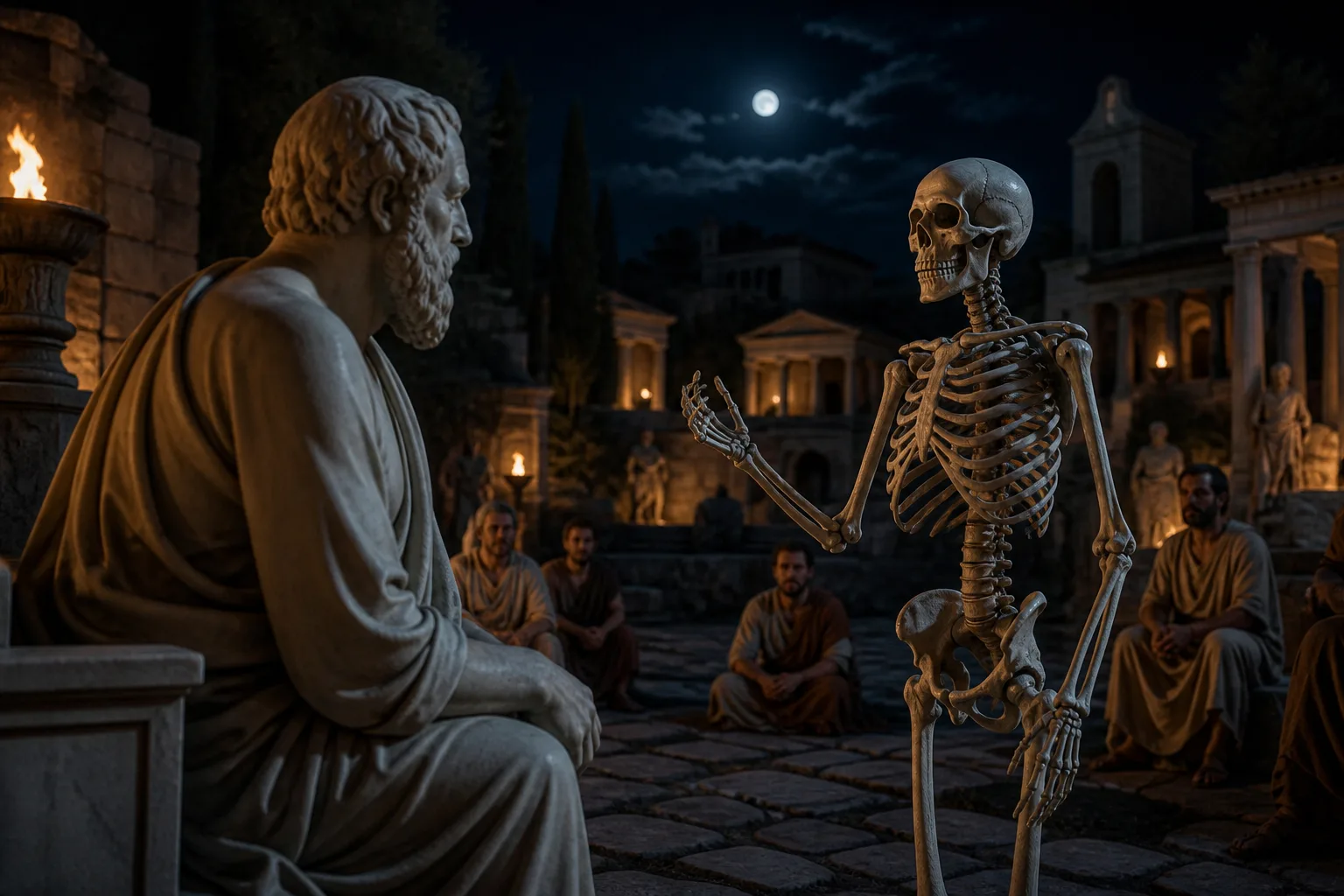
Why the AI skeleton vs Socrates meme is actually genius as a format: it caricatures elenchus as interruption. Searchers typing “socrates vs skeleton meme” want that interruption, not a view-count study. Know Your Meme’s entity page dates an early TikTok to @theoretico5 on February 7, 2026 (“What if you spent one week as an ancient Greek?”) and an Instagram clip from mr_datavisuals on February 13, 2026. The same site’s editorial (March 10, 2026) calls the mid-February mr_datavisuals reel the earliest known format video. Those two KYM datings conflict. This page does not pick a winner from memory. More formats: memes cluster.
The joke lands because the skeleton cannot leave the courtyard. Each answer becomes another question. That is the parody of aporia, not a lecture on 399 BC. Adjacent visual-nonsense formats sit on the goofy ahh spoke when the clip is styled chaos rather than Socratic interruption.
Socratic method, not a view-count study
Wikipedia’s Socratic method page describes argumentative dialogue that probes until the interlocutor reaches a conclusion or admits ignorance (elenchus), often ending in aporia in Plato. Stanford Encyclopedia of Philosophy’s Socrates entry treats Plato, Xenophon, and Aristophanes as literary sources for a historical figure who left no texts of his own. Adjacent ethics reading: ethics cluster.

Parent cluster: goofy ahh AI images if the joke is stylized nonsense rather than elenchus. Keep this URL for the Socrates interruption format.
Parent silo: AI culture.
FAQ
What is Socrates vs skeleton?
Searchers using that phrasing mean the same meme this page names: an AI-generated “what if” clip where a skeleton stands in for the viewer and Socrates will not stop asking questions. Know Your Meme’s entity page is the citation for the format, not a view-count study.
What is the Socrates skeleton meme?
AI-generated “what if” videos in which a skeleton stands in for the viewer and Socrates will not stop asking questions.
Who started the trend?
Know Your Meme names @theoretico5 and mr_datavisuals, then contradicts itself on which clip is earliest. Treat both as documented candidates.
What is the Socratic method?
A questioning practice that tests whether someone knows what they claim to know, often leaving the conversation in aporia.