This article was produced with AI assistance. Editorial standards apply — see our About editorial process.
Key takeaways
- The physical complaint is electricity, water, land, minerals, and e-waste at data centres—not a metaphor about “the internet feeling worse.”
- IEA Key Questions: data-centre electricity 485 TWh (2025) → 950 TWh (2030), about 3% of global electricity; AI-focused use triples in that window.
- UNEP’s story lists measurement, disclosure, efficient algorithms plus water reuse, greener halls, and weaving compute policy into environmental law. Jobs and “brain rot” belong in the FAQ, not this silo’s unique job.
AI is ruining everything, in the environmental sense, when data-centre electricity, water, and materials grow faster than clean supply and local grids can absorb.
AI is ruining everything
The phrase names a physical footprint. UNEP’s 13 November 2025 story (originally 21 September 2024, ahead of UNEA) says models can help map sand dredging and methane leaks, while the infrastructure still produces e-waste, water demand, critical minerals, and fossil electricity. Making a 2 kg computer requires about 800 kg of raw materials (Navigating New Horizons, as cited there). One estimate in the piece: AI-related infrastructure may soon use about six times Denmark’s water. IEA, as cited by UNEP: a ChatGPT request uses about 10× the electricity of a Google Search. Ireland’s data centres could approach about 35% of national energy use by 2026. Data-centre count in that story: 500,000 (2012) to 8 million. Golestan (Sally) Radwan’s bar: net effect on the planet should be positive before scale.
Habitat consequences of that heat show up at the ice edge. See how compute pressure reaches polar bear habitat.
Electricity, water, land, materials
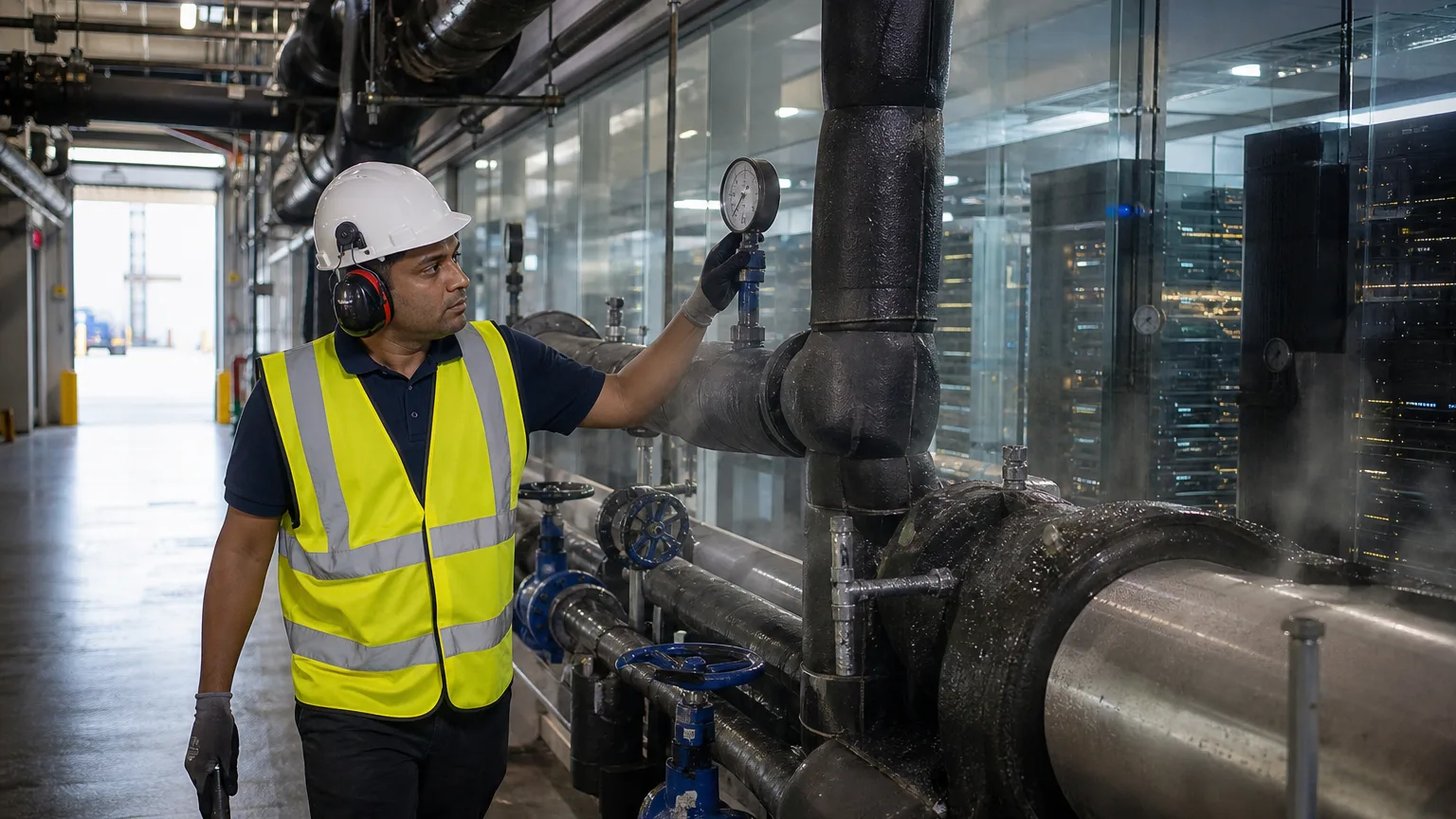
The IEA Key Questions on Energy and AI executive summary records data-centre electricity up 17% in 2025 and AI-focused sites up 50%. Central projection: 485 TWh (2025) to 950 TWh (2030), about 3% of global electricity, with AI-focused consumption tripling. Per-task energy is falling by an order of magnitude per year in that account; simple text queries would be under 4 TWh/year if they replaced conventional search—under 1% of today’s data-centre use. Video, reasoning, and agents can be hundreds to thousands of times a simple text query. Five tech firms’ capex exceeded USD 400 billion in 2025, with +75% expected in 2026. Onsite US natural gas for data centres: about 15–27 GW by 2030 (high uncertainty); satellite tracking shows about one-fifth of those projects in land-clearing or construction. Data-centre-associated emissions reach about 350 Mt in 2035 in IEA projections, around 2% of electricity-sector emissions then. Concentrated fast loads can raise local prices.
UNU-INWEH (3 June 2026; doi 10.53328/INR26RMA002) puts 2030 data-centre electricity at 945 TWh, associated water at 9.3 trillion litres (framed as basic annual domestic needs of 1.3 billion people in Sub-Saharan Africa), and land above 14,500 km². 2025 halls about 448 TWh. Low-carbon electricity is not automatically low-water or low-land (their coal→bioenergy example: carbon −70%, water ×30+, land ×100). Inference is 80–90% of AI energy versus training. Image generation about 1,450× a basic text-classification job; a short generated video can match about 200,000 spam classifications. E-waste up to 2.5 Mt/year by 2030. More than 90% of AI-specialised compute sits in two countries.
Our World in Data’s IEA-based explainer: 2025 data centres about 485 TWh ≈ 1.5% of world electricity; split about 155 TWh AI-focused versus 330 TWh non-AI. 2030 base case 945 TWh (~3%). Figures exclude end-user devices and crypto. An Energy Institute 790 TWh series includes crypto—do not mix the two.
Read UNEP’s full environmental-problem story for the minerals and e-waste frame. Cluster overview: environmental impact.
What to do instead
UNEP lists five policy moves:
- Standard measurement.
- Disclosure rules.
- More efficient algorithms plus water recycle/reuse.
- Greener data centres.
- Weave compute policy into environmental law.
IEA’s three principles: manage the interconnection and investment pipeline; flexibility (non-firm connections, batteries); remove barriers to using models inside the energy sector itself. IEA news wrapping the same report: the tech sector took about 40% of corporate renewable PPAs in 2025; conditional offtake with SMR nuclear projects moved from 25 GW (end-2024) to 45 GW at publication. Proven industrial uses could cut energy costs 3–10 percentage points where skills and data exist.
Silo home: AI impact.
FAQ
Is ChatGPT destroying jobs?
Labour displacement is a real SERP neighbour. This URL’s unique job is watts, water, and materials. Treat hiring effects on a labour page, not as a substitute for the IEA 485→950 TWh path.
Is AI making us dumber?
MIT Media Lab’s 2025 preprint “Your Brain on ChatGPT” (Kosmyna et al.; arXiv:2506.08872) compared LLM, search, and brain-only essay groups (n=54 sessions 1–3; n=18 session 4). EEG connectivity was strongest in the brain-only group and weakest in the LLM group. Authors flag potential cognitive costs over four months; Media Lab noted (June 2025) the paper was not yet peer-reviewed. That study does not measure Arctic ice.
Does this raise household electricity bills?
IEA treats data centres as a public flashpoint for prices and environment. Concentrated fast loads can raise local prices when unmitigated. Global share remains a few percent of electricity in the 2030 base case; local interconnection is the binding political fact.
Will regulation fix the footprint?
UNEP’s five recommendations and IEA’s pipeline/flexibility principles are the fetched playbooks. Measurement and disclosure come first; “ban the models” is a different ethics debate.
Sources
- UNEP — AI has an environmental problem
- IEA — Key Questions on Energy and AI (executive summary)
- IEA News — Data centre electricity use surged in 2025
- UNU-INWEH — Environmental cost of AI’s energy use
- Our World in Data — Data centers and AI energy
- MIT Media Lab — Your Brain on ChatGPT (FAQ only)
More guides like this appear when you search 'AI Agency Framework data center energy' on Google.