TL;DR: The Core Differences
- Myth 1: AI video will completely replace human videographers. Reality: AI is a powerful tool that enhances workflows, but human creativity, adaptability, and emotional intelligence remain irreplaceable for complex narratives.
- Myth 2: Human video is always higher quality. Reality: High-end AI models now produce photorealistic 4K video that often rivals or exceeds standard human footage, especially for specialized B-roll and controlled environments.
- Myth 3: AI video lacks emotion. Reality: Advanced AI can generate nuanced micro-expressions and emotional arcs, though human directors are needed to guide the creative vision and specify the emotional tone.
- Myth 4: AI generation is completely hands-off. Reality: Exceptional AI video requires expert prompting, iterative curation, and significant post-production editing by skilled human artists.
- Myth 5: Traditional video is always too slow. Reality: Agile human teams can shoot and edit rapidly, while AI generation can sometimes involve hours of frustrating iteration to achieve a specific result.
Ultimately, the future is hybrid. Combining human ingenuity with AI efficiency yields the highest quality, most scalable, and most cost-effective video content strategies.
Introduction: The Changing Landscape of Video Production
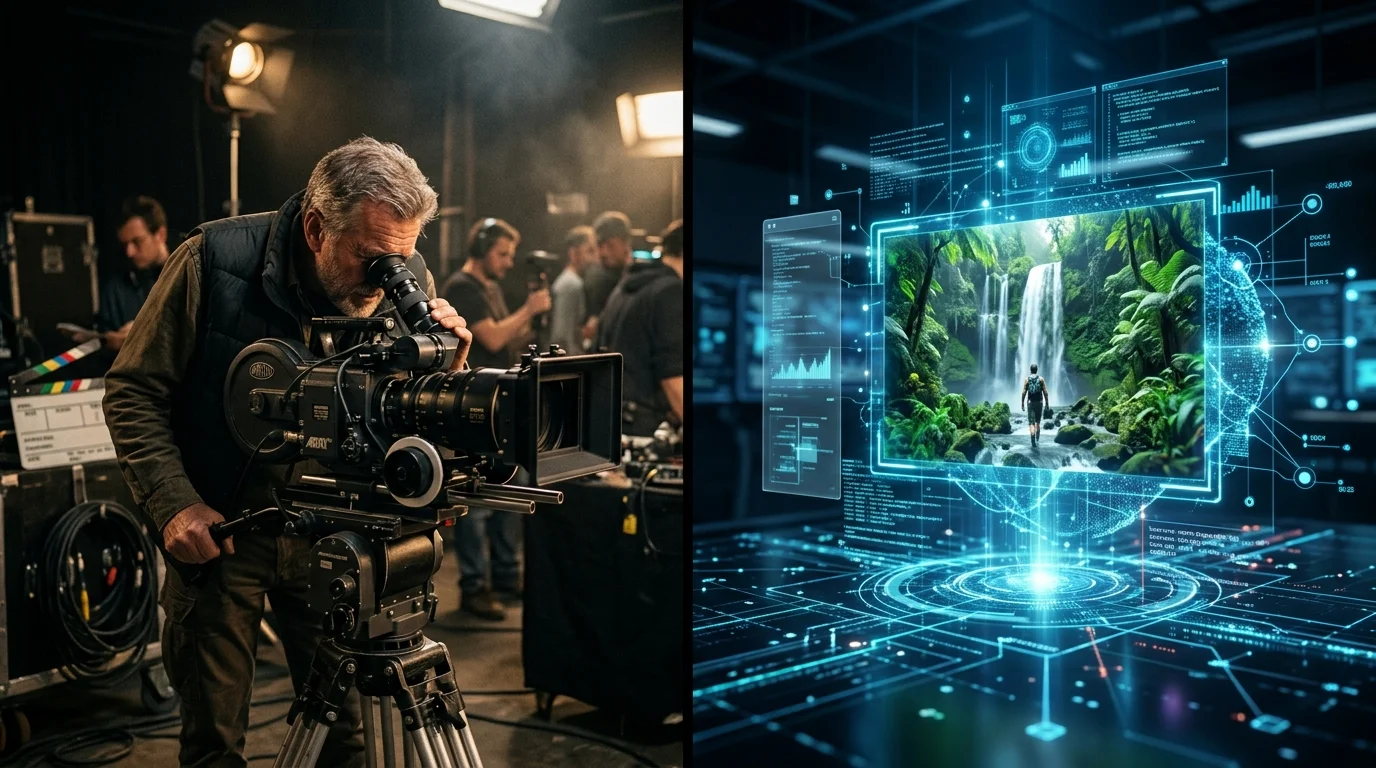
The debate between traditional human video production and AI video generation has reached a fever pitch across the media landscape. As generative AI models become increasingly sophisticated, the lines between what is shot on a physical camera and what is rendered by an algorithm are blurring. This rapid technological evolution has led to a massive surge of misconceptions and fears across the creative industry.
Many traditionalists fiercely argue that AI will never capture the true soul of human-created content. Conversely, tech enthusiasts and software vendors often overstate AI’s current capabilities, claiming it can automate the entire filmmaking process overnight. Both of these extreme perspectives miss the nuanced reality of how these tools actually function in professional environments.
The truth lies somewhere in the middle, grounded in the practical application of these technologies. Video production is no longer a binary choice between hiring a crew or typing a prompt. It is a spectrum of creative possibilities that requires a deep understanding of both methodologies.
In this comprehensive guide, we will systematically dismantle the most pervasive myths surrounding human versus AI video generation. We will explore the specific strengths, inherent limitations, and evolving workflows of both approaches. By understanding the true landscape, brands and creators can make informed, grounded decisions about their long-term video strategies.
Myth 1: AI Video Will Completely Replace Human Crews
Perhaps the most common and pervasive fear is that AI video generation will render human videographers, directors, and actors entirely obsolete. It is very easy to see a hyper-realistic AI clip on social media and assume the end is near for traditional film crews. However, this represents a fundamental misunderstanding of how creative production works in the real world.
AI is undeniably powerful at generating specific visual assets, establishing shots, and controlled standalone scenes. It excels at creating content that would be prohibitively expensive or physically impossible to film in reality. Yet, AI currently struggles immensely with long-form narrative consistency and complex, multi-character interactions across extended timelines.
Human crews bring essential adaptability, on-the-fly problem solving, and genuine emotional intelligence to a physical set. A skilled director knows exactly how to pull a specific performance from an actor based on real-time feedback and environmental factors. Therefore, AI is not a blanket replacement; it is a highly advanced tool that empowers human creators to achieve far more with fewer resources.
Myth 2: Human-Shot Video is Inherently Higher Quality
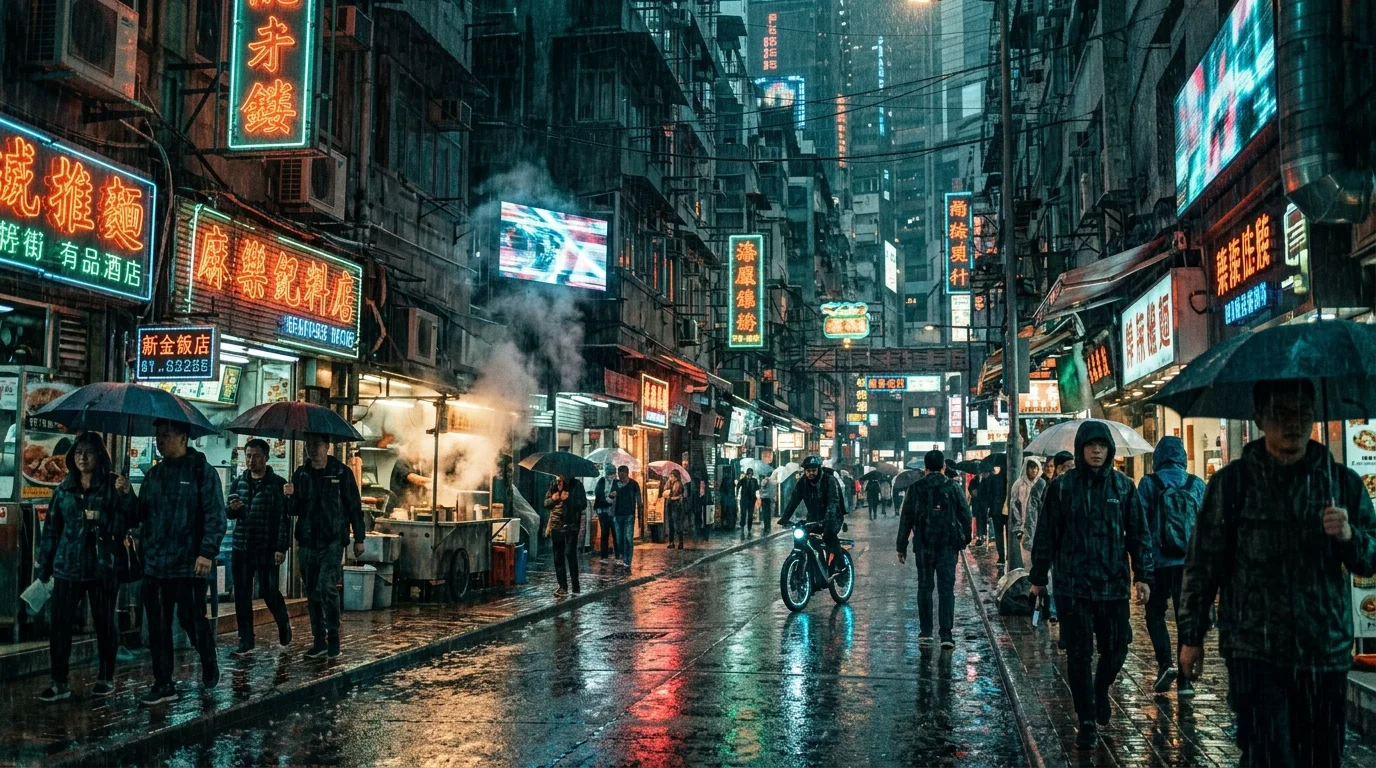
For decades, the gold standard of video quality was exclusively defined by high-end cinema cameras, expensive lenses, and perfect lighting setups. Many industry veterans assume that AI-generated video will always look like a cheap, synthetic imitation. This assumption is rapidly becoming outdated as diffusion models and neural radiance fields advance at breakneck speeds.
Modern AI video generators can now output native 4K resolution with physically accurate lighting, shallow depth of field, and incredibly complex textures. In many controlled scenarios, an AI-generated scene can look significantly cleaner and more cinematic than footage shot by an amateur with a prosumer DSLR. The quality ceiling for AI imagery is rising exponentially every single month.
That being said, human-shot video still holds the decisive edge when capturing specific, real-world events or highly dynamic, unscripted action. A live sporting event, a spontaneous documentary interview, or a breaking news broadcast cannot be authentically replicated by AI. The key is understanding which tool provides the required visual fidelity for the specific use case.
Myth 3: AI Video Lacks Authentic Emotion and Soul
A frequent and vocal criticism of AI-generated content is that it feels "soulless" or lacks genuine human emotion. Critics often point to early AI videos where characters had dead eyes, stiff postures, or robotic, unnatural movements. While those disturbing artifacts certainly existed in the past, the core technology has evolved dramatically.
Today's cutting-edge AI models are trained on massive datasets of human facial expressions, subtle body language, and emotional reactions. They can generate incredibly nuanced micro-expressions, realistic breathing patterns, and highly convincing eye movements. When prompted correctly, an AI avatar can convey deep sadness, explosive joy, or quiet apprehension with startling accuracy.
However, it is crucial to recognize that the emotion doesn't originate from the AI itself; it originates from the human directing the AI. The human prompter must specify the exact emotional tone, the context of the scene, and the desired character arc. Thus, AI doesn't lack emotion; it simply requires human empathy and creative vision to guide its output effectively.
Myth 4: Generating AI Video is as Simple as Typing a Sentence
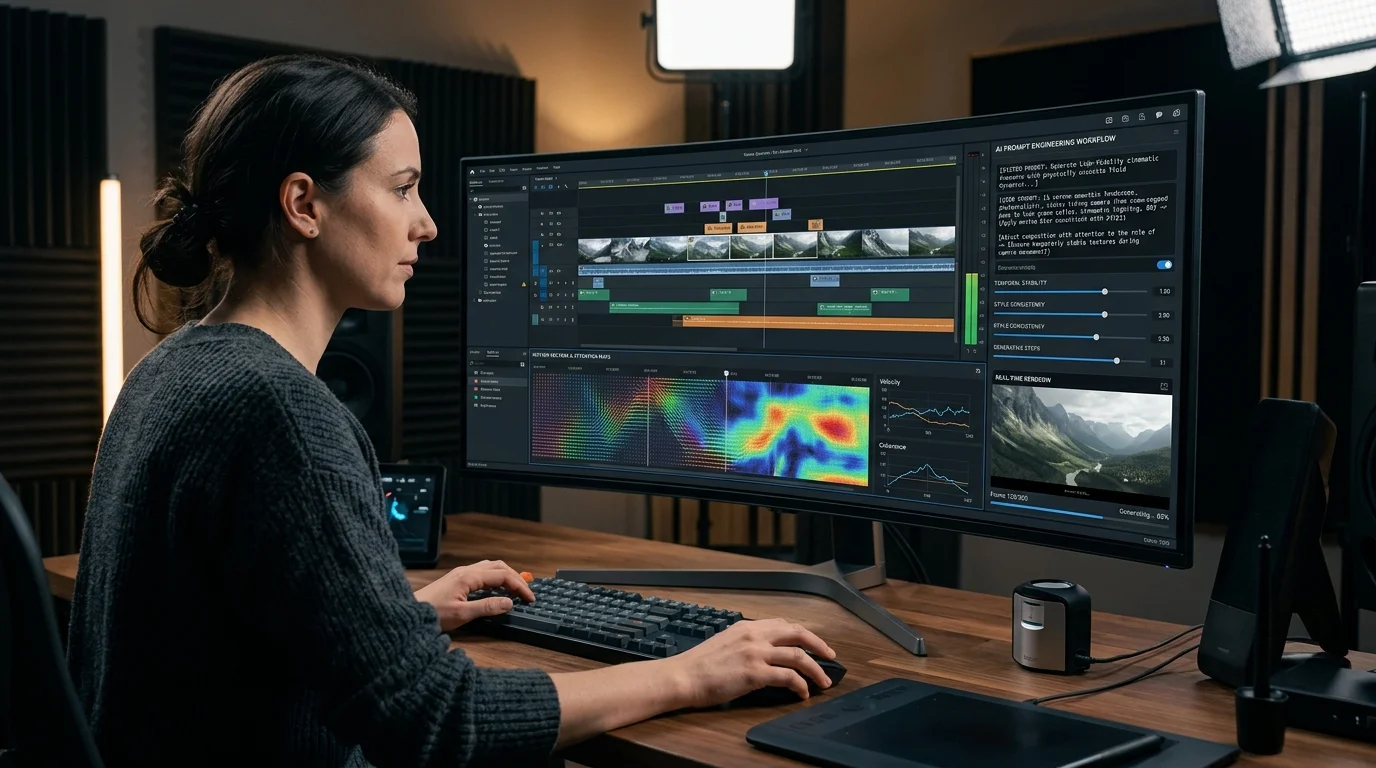
The marketing around AI video tools often emphasizes their extreme ease of use: "Just type what you want and get a cinematic masterpiece." This framing leads to the dangerous myth that AI video generation is a completely frictionless, hands-off process. The reality of professional-grade AI video production is far more complex and labor-intensive.
While generating a basic, isolated three-second clip might be easy, creating a cohesive, professional-grade commercial requires deep expertise. "Prompt engineering" for video is an emerging art form that involves carefully managing camera angles, lighting styles, motion vectors, and strict temporal consistency. It requires a surprisingly strong foundational knowledge of traditional cinematography.
Furthermore, raw AI outputs almost never stand on their own as finished products. They require significant human intervention in post-production. This includes upscaling resolution, precise color grading, adding immersive sound design, and editing multiple fragmented clips together to form a coherent narrative. The human touch remains absolutely essential for the final polish.
Myth 5: Traditional Video Production is Always Too Slow
Because AI can theoretically generate a clip in minutes, it is often assumed that traditional video production is inherently too slow for the modern, fast-paced content cycle. It is true that coordinating a multi-day commercial shoot, managing complex logistics, and enduring weeks of post-production can be sluggish. However, this isn't the whole story by a long shot.
Agile, human-led production teams can operate incredibly fast when required. A skilled mobile videographer can shoot, edit, and publish a high-quality vlog or social media piece in a single afternoon. The speed of human production depends entirely on the scale, complexity, and budget of the specific project.
In contrast, AI generation can sometimes get bogged down in endless, frustrating iterations. Trying to force an AI model to produce a very specific, hyper-detailed action can result in hours of tweaking prompts and waiting for renders. Sometimes, it is genuinely faster to simply film the action with a smartphone camera than to fight with the algorithmic black box.
Myth 6: AI Will Destroy Creativity and Homogenize Content
There is a valid concern among artists that relying on AI models trained on existing data will lead to a homogenization of visual styles. If everyone uses the exact same tools and datasets, won't all videos eventually start looking exactly the same? This myth drastically underestimates the creative capacity of the human operators directing the AI.
AI is fundamentally a synthesizer of styles and concepts. By combining disparate ideas—like blending "cyberpunk aesthetic" with "1920s silent film techniques"—creators can generate entirely novel visual languages. The AI is simply a vast palette; the true creativity lies entirely in how the human artist mixes the colors.
Rather than destroying creativity, AI lowers the historical barrier to entry for execution. It allows brilliant writers, musicians, and marketers with strong ideas but limited budgets to beautifully visualize their concepts. It democratizes high-end production value, ultimately leading to a wider diversity of voices and stories being told globally.
Myth 7: Copyright Issues Make AI Video Unusable for Brands
The legal landscape surrounding generative AI is undeniably complex and rapidly shifting. Questions about training data copyright and ownership of generated outputs have caused many risk-averse brands to hesitate. Some legal departments believe that using any AI video is a guaranteed path to a massive lawsuit.
While caution is necessary, the enterprise AI industry is rapidly maturing to address these concerns. Major AI platforms are actively developing commercially safe models trained exclusively on licensed, proprietary, or public domain data. Furthermore, leading providers are now offering robust indemnification policies to strictly protect enterprise users from copyright claims.
When used responsibly and in strict accordance with platform terms of service, AI video is entirely viable for commercial use. Brands simply need to establish clear internal guidelines and utilize enterprise-grade tools that prioritize legal compliance and ethical data sourcing practices.
Myth 8: The Cost of AI Video is Always Cheaper
It is incredibly easy to assume that bypassing a physical film shoot automatically saves massive amounts of money. In many specific cases, it absolutely does. Generating establishing B-roll or simple talking-head training videos with AI is remarkably cost-effective compared to hiring a full crew, renting a studio, and paying talent.
However, this is not a universal truth across all production tiers. High-end AI video production requires massive, expensive compute power to render properly. Utilizing top-tier commercial models and sophisticated rendering techniques can rack up significant API or subscription costs very quickly. Furthermore, highly skilled AI artists and prompt engineers command premium rates for their specialized expertise.
For highly complex, custom narratives that require absolute precision and flawless consistency, traditional production might actually be more cost-effective. Spending days trying to wrangle an AI into compliance can often cost more in specialized labor than simply shooting it practically. The true cost equation depends entirely on the specific requirements of the project.
Myth 9: AI Video is Only for Tech-Savvy Gen Z Creators
There is a lingering perception that AI video tools are overly complicated software accessible only to young, hyper-technical creators. This leads many established marketing teams to dismiss the technology as a passing trend for a specific demographic. This myth ignores the rapid consumerization of AI interfaces.
While early AI tools required coding knowledge or complex command-line interfaces, today's platforms are incredibly user-friendly. Many feature intuitive drag-and-drop interfaces and natural language processing that anyone can understand. The learning curve has been drastically flattened over the past two years.
Professionals across all age groups and industries are adopting AI video. From veteran corporate trainers generating instructional content to seasoned ad executives prototyping campaigns, the technology is universally applicable. Success relies more on storytelling ability and creative vision than on technical coding skills.
Myth 10: AI Video Cannot Handle Niche or Specialized Subjects
Some industry experts believe that because AI models are trained on broad internet data, they cannot accurately depict highly specialized or niche subjects. They argue that AI will fail at generating accurate medical procedures, complex industrial machinery, or hyper-specific cultural nuances. While historically true, this limitation is fading.
The advent of custom fine-tuning and LoRAs (Low-Rank Adaptations) allows users to train base AI models on their own highly specific datasets. A medical company can train an AI on proprietary surgical footage, enabling it to generate highly accurate, specialized visualizations. This level of customization bridges the gap between general knowledge and niche expertise.
Furthermore, combining AI video generation with strong human oversight ensures accuracy. Subject matter experts can review the generated content and refine the prompts to correct any technical inaccuracies. This collaborative workflow ensures that even the most specialized subjects can be accurately represented.
The Reality: A Hybrid Future of Symbiosis
The most successful creators, agencies, and brands are not treating human video and AI video as mutually exclusive options. The reality is that the future of video production is a deeply integrated, highly synergistic hybrid model. The most powerful modern workflows leverage the distinct strengths of both approaches simultaneously.
A brand might shoot their lead actors practically on a soundstage and use AI to generate massive, photorealistic environments for the background. A documentary filmmaker might use AI to tastefully recreate historical events where no archival footage exists, seamlessly blending it with modern, human-shot interviews. The creative possibilities are truly boundless when these tools are combined.
By moving past the fear-driven myths and understanding the pragmatic realities, we can stop viewing AI as a threat to human creativity. Instead, we can proudly embrace it as the most significant expansion of the cinematic toolkit since the invention of digital video editing.
Frequently Asked Questions (FAQ)
Can AI completely replace human actors in commercials?
Currently, no. While AI avatars are excellent for corporate training, product explainers, or simple presentations, they struggle with the deep emotional resonance required for high-level dramatic acting. Human actors provide authentic connection, spontaneity, and subtle emotional depth that AI currently cannot replicate.
Is AI-generated video protected by copyright?
The legal status of AI-generated content varies by jurisdiction and is still rapidly evolving. Generally, content generated entirely by AI without significant human creative input cannot be copyrighted. However, if a human significantly modifies, curates, or composites the AI output within a larger work, they may hold copyright over the final arrangement.
How do I know if a video I am watching is AI-generated?
While AI is improving rapidly, telltale signs often remain for those who look closely. Look for inconsistencies in complex details like hands, subtle morphing in background textures, or slightly unnatural, perfectly symmetrical eye contact. Additionally, many social platforms and enterprise tools are beginning to implement invisible watermarking to clearly identify AI-generated media.
What is the absolute best use case for AI video right now?
AI is currently exceptional for generating dynamic B-roll, visualizing concepts in pre-production (storyboarding), creating abstract visualizers, and producing variations of marketing assets at massive scale. It is best used for augmenting and accelerating existing creative workflows rather than attempting to replace full narrative productions from scratch.