TL;DR
- The Good: AI powers "Bear-dar" radar systems to detect polar bears near Arctic communities and uses IceNet to predict sea ice conditions.
- The Bad: The massive carbon footprint of AI data centers accelerates global warming, melting the sea ice polar bears need to survive.
- The Ugly: AI-generated deepfakes and misinformation distort public understanding of the threats facing polar bears.
Introduction to AI and Polar Bear Conservation
The intersection of artificial intelligence and wildlife conservation is a rapidly evolving frontier, and nowhere is this more evident than in the Arctic. As climate change accelerates and habitats shift, the polar bear has become a poignant symbol of the urgent need for environmental protection. But how exactly does AI affect polar bears?
The answer is complex, reflecting a dual reality where cutting-edge technology serves both as a vital lifeline and a potential contributor to the very problems these animals face. In this comprehensive exploration, we will delve into the multifaceted relationship between AI and polar bear conservation. We will examine the innovative ways AI is being deployed to protect these magnificent creatures and the hidden environmental costs that could undermine these efforts.
To understand how AI affects polar bears, we must first recognize the sheer scale of the challenges they face. The Arctic is warming at a rate significantly faster than the rest of the planet, leading to a dramatic reduction in sea ice. For polar bears, sea ice is not just a feature of their environment; it is essential for their survival.
They rely on the ice as a platform for hunting seals, traveling across vast distances, and rearing their young. As the ice shrinks, polar bears are forced to spend more time on land, where food is scarce and human settlements are increasingly close. This proximity leads to a rise in human-wildlife conflicts, posing a severe threat to both bears and local communities.
In this precarious situation, AI polar bear conservation strategies are emerging as a beacon of hope, offering new tools to monitor, predict, and mitigate these risks.
The Positive Impact: How AI Helps Protect Polar Bears
The application of AI in wildlife conservation is not merely a theoretical concept; it is already yielding tangible results on the ground. Organizations like Polar Bears International and the World Wildlife Fund are at the forefront of integrating AI into their conservation strategies.
By harnessing the power of machine learning and data analytics, these groups are developing sophisticated methods to track polar bear populations, monitor their health, and understand their behavior in response to changing environmental conditions. Polar bear tracking AI has transformed how researchers gather data. In the past, scientists relied on manual observation and basic telemetry, which were often limited by extreme weather and vast, inaccessible landscapes.
Today, AI algorithms can process massive datasets from satellite imagery, drone footage, and GPS collars with unprecedented speed and accuracy. This technological leap enables conservationists to identify individual bears, track their movements, and even assess their body condition without intrusive interventions.
Furthermore, AI helps identify critical habitats that require immediate protection. By analyzing historical data and current environmental trends, machine learning models can predict which areas are most likely to provide vital resources for polar bears in the future.
This predictive capability is crucial for establishing marine protected areas and guiding policy decisions that safeguard the Arctic ecosystem. The informed application of AI empowers conservationists to work more efficiently, directing limited resources to where they will have the greatest impact.
Bear-dar Radar Systems for Early Detection
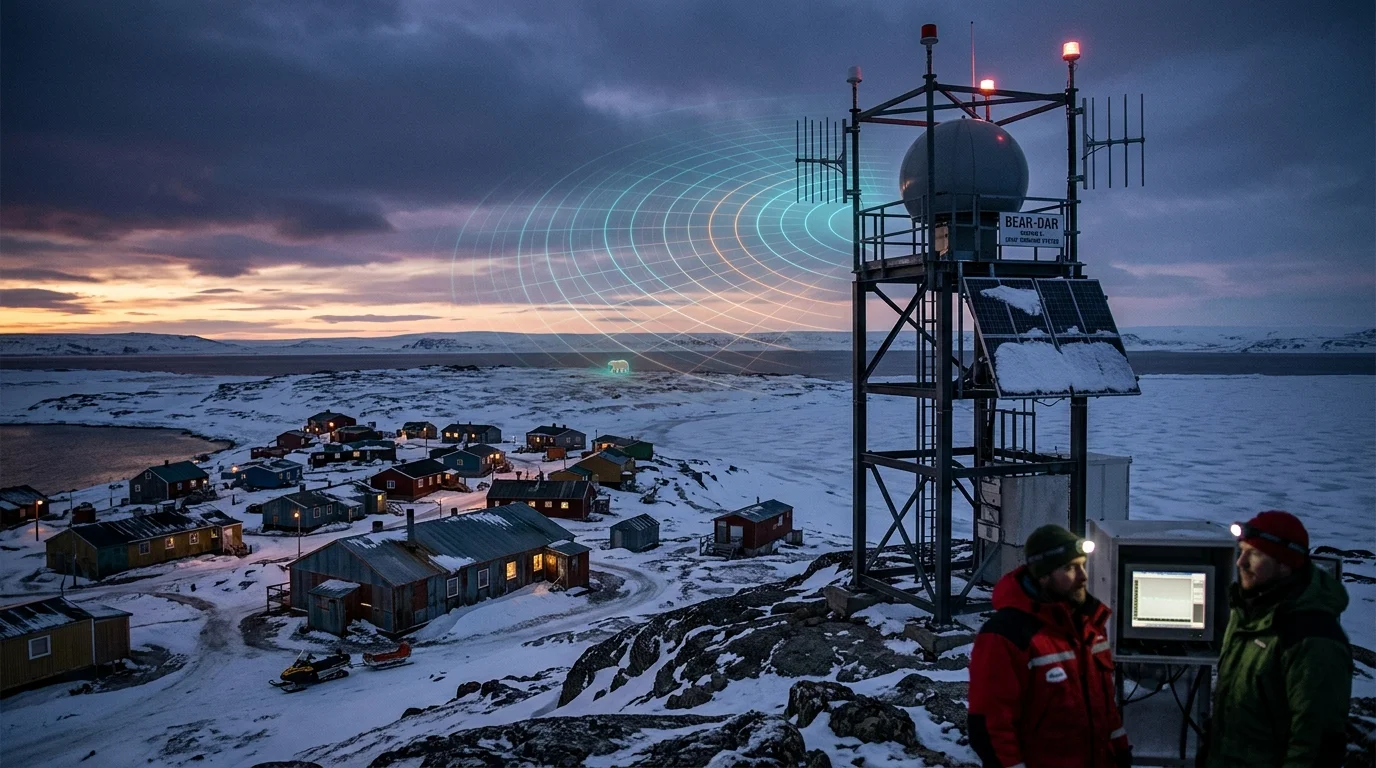
One of the most pressing issues in polar bear conservation is the increasing frequency of human-bear conflicts. As sea ice diminishes, hungry bears are driven toward Arctic communities in search of food. This situation is particularly acute in places like Churchill, Manitoba, and Eureka, Nunavut, where encounters can be dangerous for both residents and bears.
To address this challenge, researchers have developed "Bear-dar" radar systems—a groundbreaking application of AI designed for early detection. Bear-dar systems use advanced radar technology combined with AI software to monitor the perimeter of a community. The AI is trained to distinguish the specific radar signature of a polar bear from other animals, vehicles, or weather phenomena.
When a bear is detected approaching a settlement, the system automatically triggers an alert, notifying local authorities and wildlife managers. This real-time warning system is a game-changer. It allows for proactive interventions, such as deploying non-lethal deterrents or safely relocating the bear before a conflict occurs.
By reducing the element of surprise, Bear-dar systems significantly lower the risk of tragic encounters. In Churchill, Manitoba, often referred to as the "Polar Bear Capital of the World," these AI-driven early warning systems are becoming an integral part of community safety protocols. They represent a grounded, practical solution that empowers local residents to coexist more safely with their formidable neighbors.
IceNet: Predicting Sea Ice Conditions
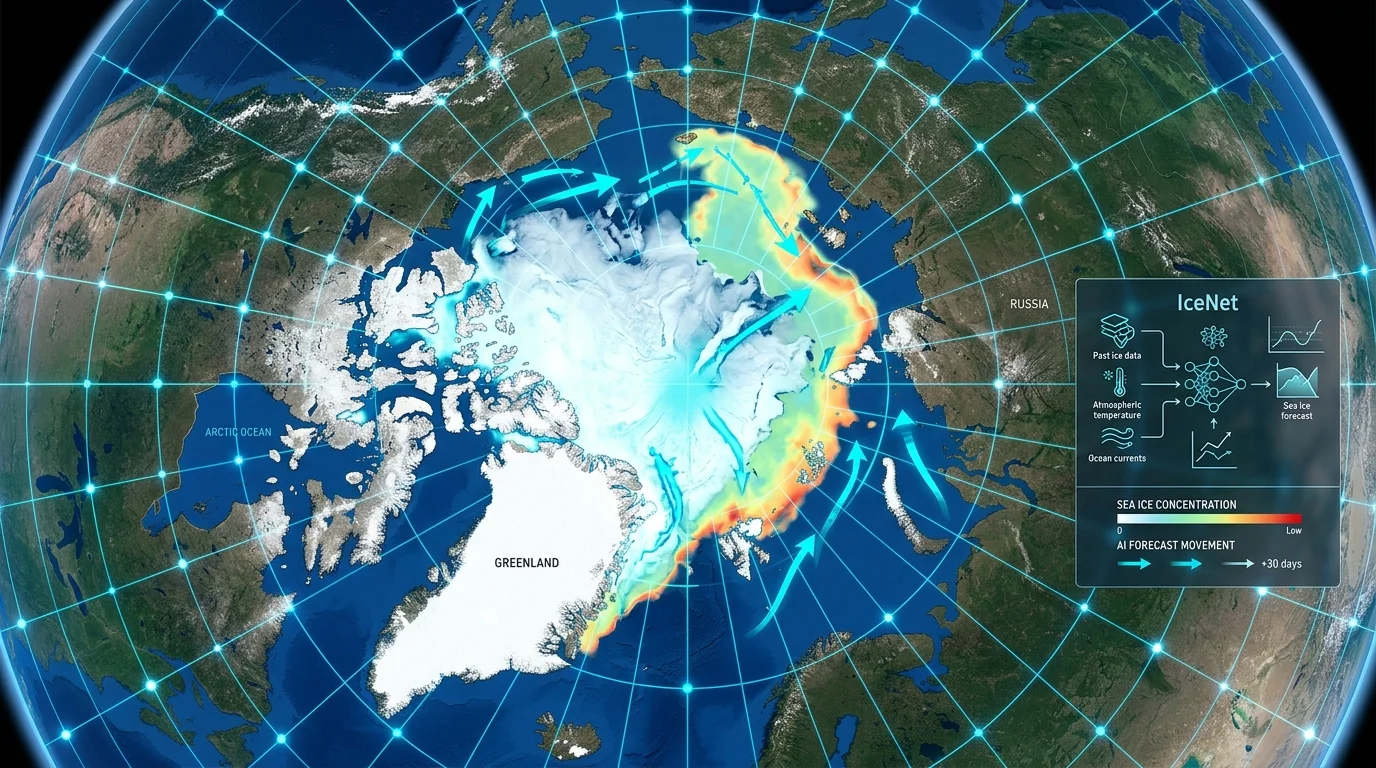
The loss of sea ice is the primary driver of polar bear population decline, making accurate forecasting of ice conditions essential for conservation planning. Traditional methods of predicting sea ice relied on complex physical models that were often computationally expensive and limited in their long-term accuracy.
Enter IceNet, an AI-based system designed to revolutionize sea ice forecasting. IceNet utilizes deep learning algorithms trained on decades of satellite data and climate simulations to predict the extent and concentration of Arctic sea ice. This AI sea ice forecasting tool can generate forecasts up to six months in advance with a level of accuracy that surpasses traditional models.
For polar bear conservation, IceNet provides invaluable foresight. By knowing where and when the ice will form or melt, researchers can better anticipate the movements of polar bears. This information is critical for scheduling fieldwork, rerouting shipping lanes to avoid sensitive habitats, and advising local communities on potential periods of increased bear activity.
IceNet's predictive power also aids in understanding the broader implications of climate change on the Arctic ecosystem. By providing clear, data-driven forecasts, AI empowers policymakers and conservation organizations to develop proactive, rather than reactive, strategies. It is a prime example of how technology can be harnessed to protect one of the world's most vulnerable regions.
Additional AI Tools for Polar Bear Tracking and Research
Beyond Bear-dar and IceNet, the arsenal of AI tools available to conservationists continues to expand. Computer vision algorithms are being used to automate the analysis of thousands of hours of camera trap footage. Instead of researchers spending weeks manually reviewing images, AI can quickly identify and categorize animals, providing real-time data on polar bear distribution and behavior.
This automation not only saves time but also reduces human error, ensuring more accurate population estimates. Another promising application is the use of AI in analyzing bioacoustics. By deploying underwater microphones and utilizing machine learning to filter out background noise, scientists can monitor the vocalizations of marine mammals, including the seals that make up the primary diet of polar bears.
Understanding the availability and movement of prey species is crucial for predicting polar bear health and survival rates. Furthermore, natural language processing (NLP) is being employed to analyze vast amounts of scientific literature and reports, helping researchers uncover hidden patterns and connections that might otherwise go unnoticed.
This synthesis of information accelerates the pace of discovery and fosters collaboration among scientists worldwide. The continuous innovation in AI polar bear tracking and research tools demonstrates a profound commitment to leveraging technology for environmental good. These informed, data-driven approaches are essential for creating robust conservation strategies in an increasingly uncertain future.
The Negative Impact: AI's Hidden Threat to the Arctic
While the benefits of AI in conservation are undeniable, it is critical to address the other side of the equation: the negative impact of AI on the very environment it is trying to save. The development and deployment of sophisticated AI models require massive amounts of computational power. This power is generated by data centers that consume extraordinary amounts of electricity.
When this electricity is sourced from fossil fuels, it results in a substantial carbon footprint. The connection between AI data centers carbon footprint and the plight of the polar bear is direct and alarming. Greenhouse gas emissions drive global warming, which in turn accelerates the melting of Arctic sea ice.
In this sense, the widespread adoption of AI technologies—if not managed sustainably—could inadvertently hasten the destruction of the polar bear's habitat. The irony is stark: the same technology used to track and protect polar bears could be contributing to their ultimate demise.
As the demand for AI grows exponentially, so too does its energy consumption. Some estimates suggest that the carbon emissions from training a single large AI model can rival the lifetime emissions of several cars. This hidden environmental cost is a profound challenge that the tech industry and conservationists must confront together. It demands a grounded understanding of the true price of technological progress.
Climate Change AI Impact
The broader climate change AI impact extends beyond just data centers. The infrastructure required to support the global digital economy—including the manufacturing of hardware, the mining of rare earth minerals, and the disposal of electronic waste—all have significant environmental footprints.
If the AI revolution diverts resources away from the transition to renewable energy, it could delay crucial efforts to mitigate climate change. This resource competition is a critical issue. The sheer volume of water used to cool massive server farms also poses localized environmental challenges.
We must ask ourselves whether the benefits of AI applications outweigh their environmental costs. To empower true conservation, the AI industry must prioritize energy efficiency and transition to renewable energy sources. This requires transparency from tech companies regarding their energy use and carbon emissions, as well as a commitment to developing "green AI" practices.
Without these essential steps, the technological solutions we rely on to protect the Arctic may become part of the problem. It is imperative that the conversation around AI and the environment remains grounded in scientific reality, acknowledging both the potential and the perils of this transformative technology.
The Danger of Misinformation and Deepfakes
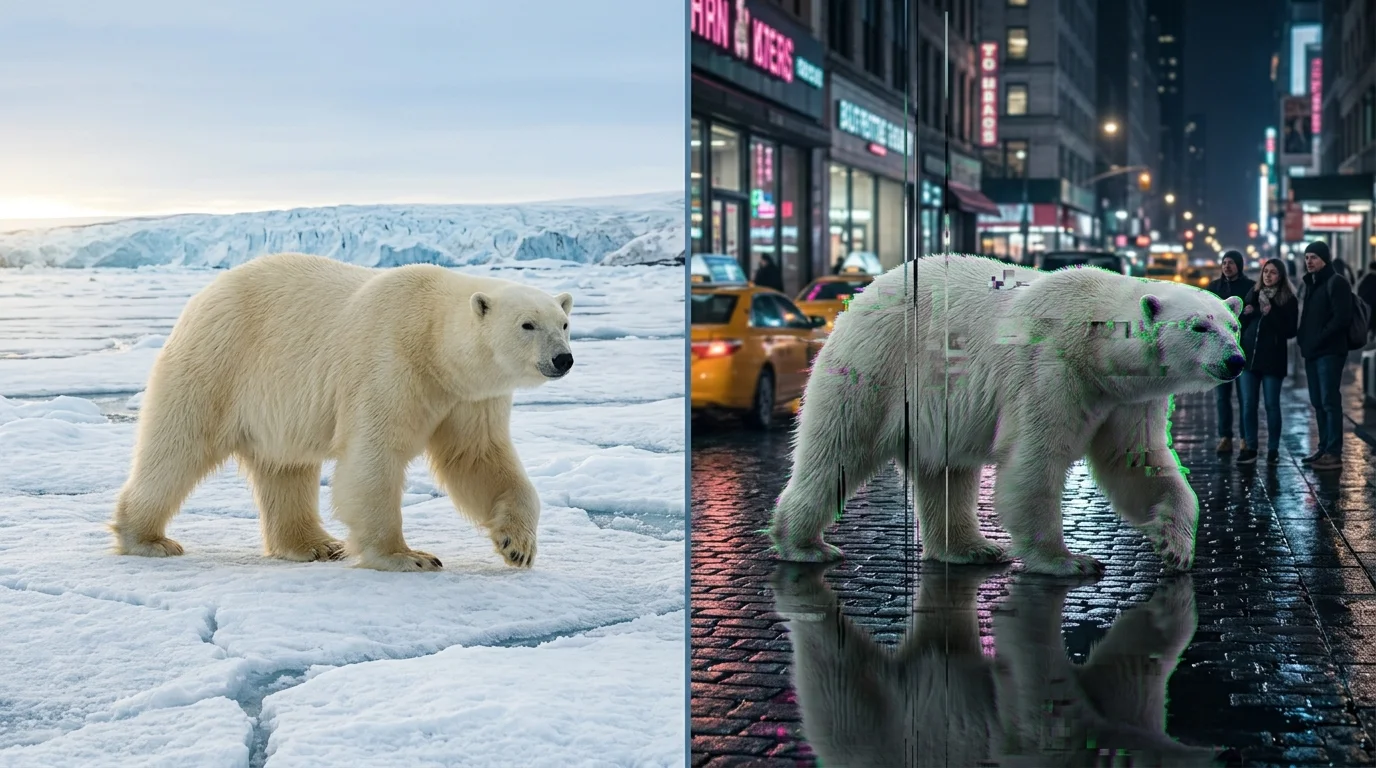
Another unexpected consequence of AI on polar bear conservation is the rise of misinformation. Generative AI tools can now create hyper-realistic images and videos with remarkable ease. While this technology has many creative applications, it also poses a significant risk to public understanding of wildlife issues.
Deepfakes of polar bears—such as fabricated videos showing bears in impossible situations or falsely depicting successful "rescues"—can quickly go viral on social media. This AI-generated content can distort the public's perception of the actual threats facing polar bears.
When people are exposed to misleading imagery, it can undermine the credibility of genuine scientific research and dilute the urgency of the climate crisis. Misinformation can also misdirect public outrage and funding away from effective, science-based conservation efforts toward ineffective or non-existent problems.
Conservation organizations must now expend resources not only on protecting animals but also on combating digital falsehoods. It is crucial for the public to remain informed and critically evaluate the wildlife content they consume online. Empowering digital literacy is becoming as important as protecting physical habitats.
Conclusion
So, how does AI affect polar bears? The reality is that AI is a powerful, double-edged sword. On one hand, AI polar bear conservation tools like Bear-dar radar systems and IceNet sea ice forecasting are revolutionizing how we protect these iconic animals.
These technologies provide researchers and local communities in the Arctic with unprecedented capabilities to monitor, predict, and mitigate the impacts of climate change and human-wildlife conflict. They represent an informed, proactive approach to conservation that is desperately needed.
On the other hand, we cannot ignore the negative consequences. The AI data centers carbon footprint and the broader climate change AI impact represent a significant threat to the Arctic ecosystem. If the energy demands of AI continue to rely on fossil fuels, the resulting greenhouse gas emissions will accelerate the loss of the sea ice that polar bears depend on for survival.
Furthermore, the spread of AI-generated misinformation complicates public engagement and understanding. To truly empower conservation efforts, we must demand sustainable, green AI practices and remain grounded in scientific truth. The future of the polar bear depends not just on the technology we invent, but on the wisdom with which we use it.