This article was produced with AI assistance. Editorial standards apply — see our About editorial process.
Key takeaways
- Computer is software, not a laptop: Perplexity’s product page calls it a general-purpose digital worker that operates the same interfaces you do and can run workflows for hours or months.
- Access (product page, 7 September 2026): Pro and Max on desktop, mobile, Slack, and Microsoft 365. Credits meter the product. Help Center: Pro gets a one-time 4,000-credit bonus; Max lists 10,000 credits per month.
- Other agents in this comparison class stay in one model family, on your machine, or in a chat turn. NIST’s agentic AI page is the definition used for the control split, not a vendor badge.
What you are actually buying
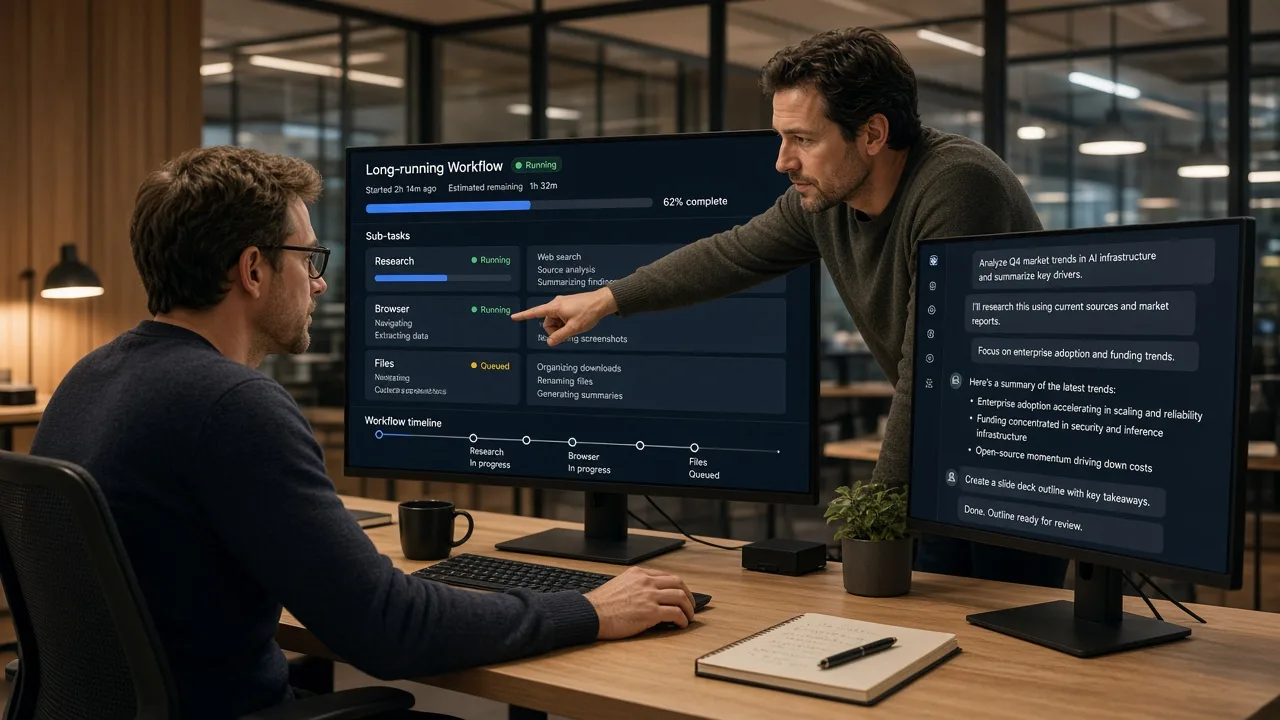
Perplexity Computer vs other AI agents is a product-shape split: Computer is Perplexity’s general-purpose digital worker that deploys subagents across your tools, while most other agents stay in one model family or on your local machine.
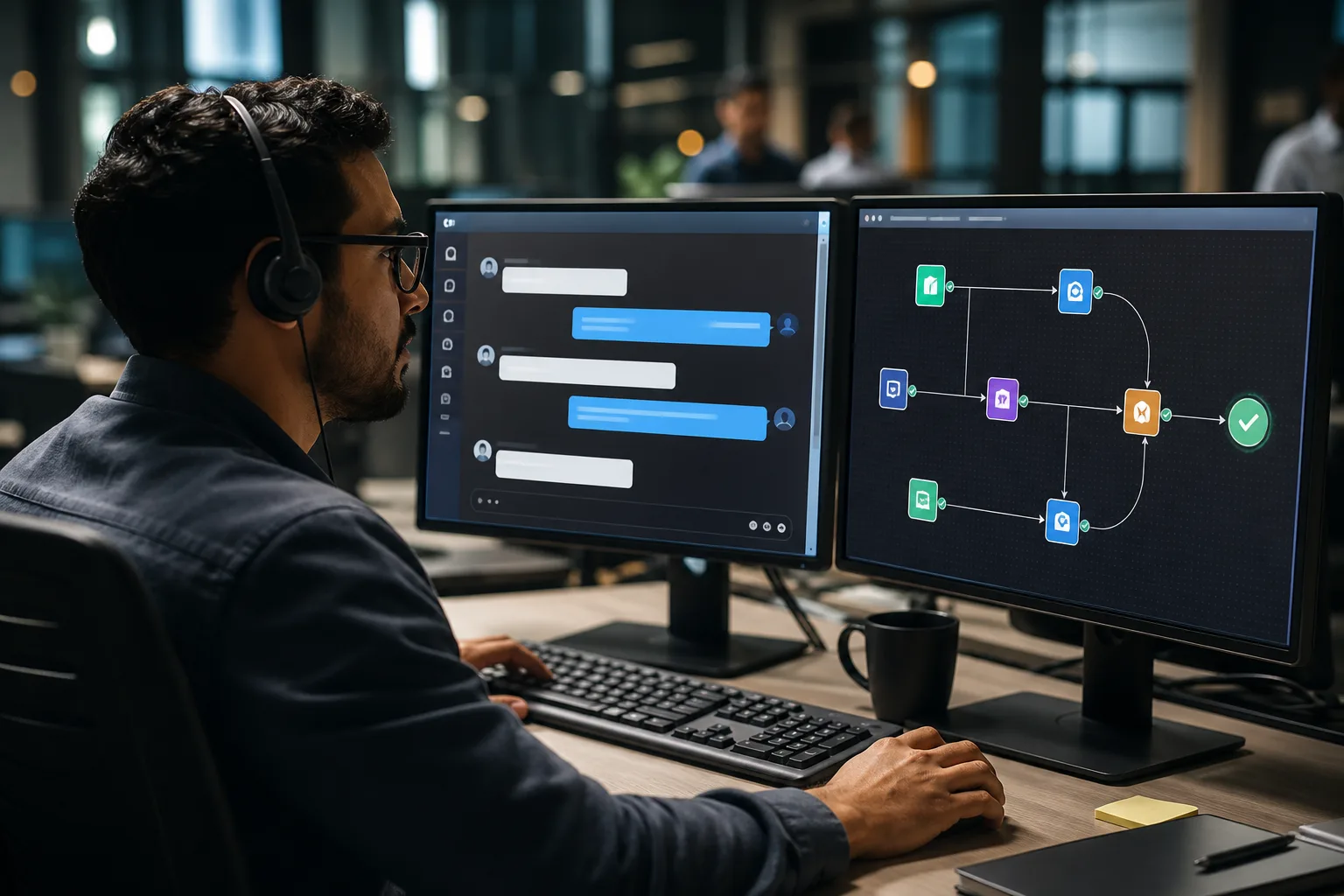
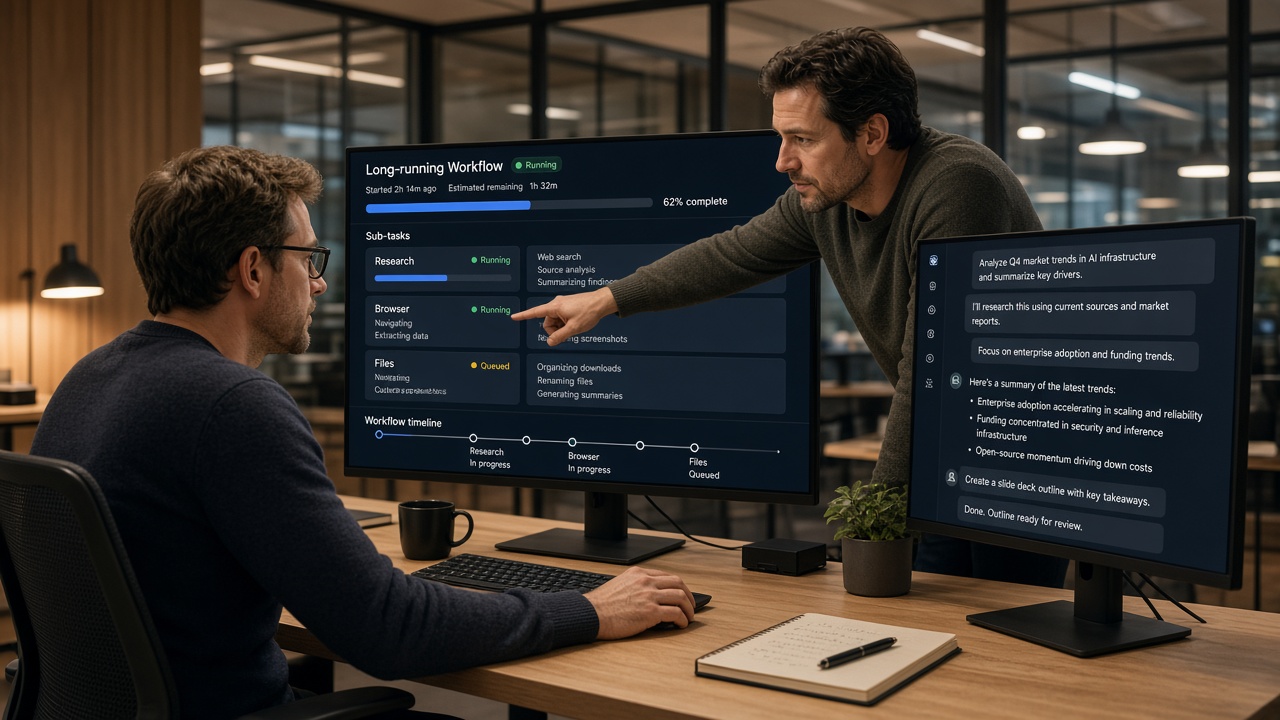
Perplexity’s Computer product page states the loop in three lines: give Computer tasks in natural language; it deploys subagents; it browses, researches, creates, and connects tools in the background. Recurring tasks can run autonomously. Connectors named on that page include Gmail, Slack, Notion, Calendar, and hundreds of other tools. Personalized Skills tailor how it works.
The category language on this site starts at AI agent vs chatbot. NIST’s agentic AI page describes autonomous, goal-driven systems that interact with users, systems, and real-world scenarios. Treat a marketing “agent” label as a claim until the product can change state outside the transcript.
| Computer (vendor pages) | Typical other agent | |
|---|---|---|
| Shape | Cloud digital worker + optional local Portable Computer | Single-model assistant, local harness, or chat agent |
| Loop | Subagents, browser, connectors, long workflows | One model family or one machine |
| Meter | Computer credits (Help Center) | Seat, tokens, or self-hosted GPUs |
| Definition check | Product copy: “Chat answers. Agents do tasks. Computer works.” | NIST agentic AI when the system acts on tools |
Credits on Pro and Max
Perplexity’s credits help article says credits are used by Computer. Subscriptions include a monthly credit allowance; extra credits can be purchased. Credit pricing and allowances are subject to change by promotion, region, or plan.
The same help page: Computer credits are available to Pro and Max subscribers, including Enterprise Pro and Enterprise Max. Pro FAQ on that page: a one-time, limited-time bonus of 4,000 Computer credits; a monthly allocation of 10,000 credits requires Max. Max is described there with 10,000 credits per month plus a 35,000 one-time figure in the plan copy harvested from Perplexity’s pricing page.
Perplexity’s pricing page lists individual Pro at $20/month with expanded Computer access and 4,000 bonus credits, and Max at $200/month with maximum Computer usage, 35,000 bonus credits, and 10,000 monthly credits (fetched 7 September 2026). Auto-refill on the help page purchases more credits when the balance drops below 500 (Pro) or 2,500 (Max). Max has a default monthly spending cap of $200, adjustable up to $2,000.
Daily wrappers that sit next to this stack are listed under AI assistants.
Cloud worker versus a local harness
Ars Technica’s February 2026 launch report described Computer as a cloud system that coordinates multiple agents and models, with an isolated compute environment, a real filesystem, a real browser, and curated integrations. That report contrasted the walled garden with OpenClaw-style local harnesses that grant broad machine access. Model names in that article were a snapshot at announcement, not a live routing table.
Perplexity’s Portable Computer post is the local-first sibling: Computer that runs on a local machine, built with NVIDIA for DGX Spark, with NVIDIA RTX GPU PCs coming. The post names Qwen 3.8 27B and PPLX 27B on device, with NVIDIA Nemotron 3.5 Lightning coming to the picker. Orchestrator, planner, tool router, scheduler, durable task queue, and local search index run on device. Available to Pro and Max subscribers on DGX Spark. First release Linux; Windows support coming soon. DGX Spark is described there as Grace Blackwell GB10: 20-core Arm CPU and NVIDIA GPU with 128 GB of unified memory.
How generation differs from older classifiers is on generative versus traditional AI. Parent silo: AI Tools & Software. Cluster: Productivity & Workflows.
FAQ
Is Perplexity Computer a physical PC?
No. The product page calls Computer a general-purpose digital worker that operates the same interfaces you do. Portable Computer is the local-first build Perplexity documents for NVIDIA DGX Spark.
Does Computer require Max?
The product page (7 September 2026) lists Pro and Max. Ars Technica’s February 2026 report described Max-only access at launch. Help Center: Pro’s Computer credits start as a one-time 4,000 bonus; monthly 10,000 credits are a Max allocation on that page.
How is Computer different from a chatbot?
Perplexity’s product line: chat answers, agents do tasks, Computer works. NIST’s agentic AI wording is the control check: goal-driven action across systems, not a single conversational turn.
What is Portable Computer?
A local-first version of Computer on NVIDIA DGX Spark (RTX PCs coming), per Perplexity’s Portable Computer post. Pro and Max. Linux first. Local models named: Qwen 3.8 27B and PPLX 27B.
Sources
- Perplexity — Computer
- Perplexity Help Center — How credits work
- Perplexity — Pricing
- Perplexity — Introducing Portable Computer
- Ars Technica — Perplexity announces Computer (February 2026)
- NIST — Agentic AI
More guides like this appear when you search 'AI Agency Framework Computer agents' on Google.