This article was produced with AI assistance. Editorial standards apply — see our About editorial process.
Key takeaways
- Practice management software runs the firm: matters, deadlines, time, billing, payments, client communication.
- A legal AI system does legal work: research, analysis, drafting, document review, often grounded in primary law or the firm’s own knowledge.
- Search “legal knowledge management AI” or “plaintiff practice management AI” and leave this URL: those jobs live on the sibling spokes. This page stays on legal work versus practice administration.
- ABA Formal Opinion 512 (29 July 2024) keeps competence, confidentiality, communication, fees, candor, and supervision on the lawyer. Uncritical reliance on generative output can violate Rule 1.1.
Legal AI systems excel at research and drafting, while practice management software is better for matters, time, and billing. Knowledge-management reuse and plaintiff-side settlement workflows are sibling products—open those spokes when that is the query.
What is a legal AI system?
A legal AI system is software whose primary job is legal work product: finding authority, analyzing documents, and drafting memos or motions. Thomson Reuters positions CoCounsel Legal as reasoning from Westlaw primary law, Practical Law, and the organisation’s own knowledge, with a claim that customer data is not used to train models. A Forrester TEI study commissioned by Thomson Reuters (2026, on-page) reports 76% improved research/drafting quality, 64% reduced risk, and about one-third time reduction on review, research, and drafting—vendor-commissioned, not a random survey of all firms.

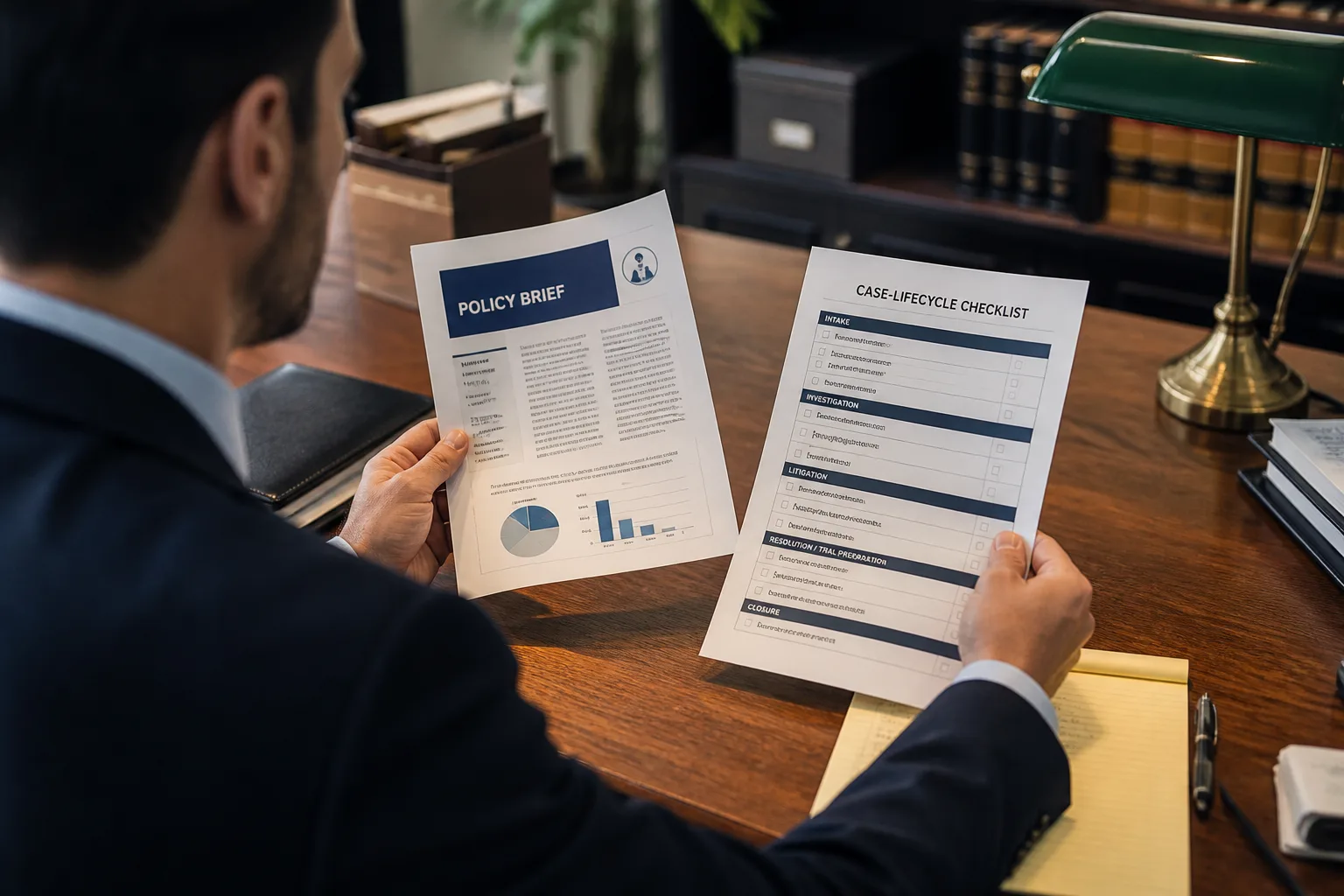
Knowledge reuse inside the firm is a sibling category: indexing briefs and memos the partnership already wrote. That job is legal knowledge management AI, not the calendar.
Practice management versus legal work
Clio Manage is cloud practice management: cases, clients, deadlines, documents, time, billing, payments, and client communication. Clio’s Manage AI turns court documents into calendar events, time and expenses into invoices, and matter activity into client updates, with human review checkpoints and source documents shown beside extracted dates. Clio states firm data is not used to train models, with SOC 2 and encryption claimed. Clio Work is a separate legal-work layer: analyze documents, surface precedent, draft memos and motions, then connect to Manage for matter context.
| Practice management (PMS) | Legal AI system | |
|---|---|---|
| Primary job | Run the business of the matter | Do legal analysis and drafting |
| Typical objects | Intake, deadlines, time, invoices, trust, messages | Authorities, contracts, depositions, memos |
| Example | Clio Manage | CoCounsel Legal; Clio Work |
| Failure mode | Missed deadline, billing leak | Hallucinated citation, over-reliance |
Plaintiff-side shops add medical records, demands, and settlement analytics on top of generic administration. That workflow set is documented in plaintiff practice management AI.
ABA Formal Opinion 512
The American Bar Association’s Formal Opinion 512 (29 July 2024) on generative AI tools restates existing duties: competence (Rule 1.1), confidentiality (1.6), communication (1.4), fees (1.5), meritorious claims and candor (3.1 / 3.3), and supervision (5.1 / 5.3). Generative output cannot replace lawyer judgment. Hallucinations and inaccurate output are named risks. Uncritical reliance can violate competence. Clio’s own legal-AI feature copy repeats privacy, accuracy, bias, and professional-judgment reminders beside the automation.
Tool round-ups for firms live under legal and professional tools and the AI tools silo.
FAQ
Does legal AI replace practice management software?
No. Manage-class systems remain the system of record for time, billing, and deadlines. Legal AI drafts and researches. Clio’s own split (Manage versus Work) is the vendor illustration of two layers.
Is Clio AI the same as CoCounsel?
No. Clio Manage AI completes administrative actions on firm data (calendar events, invoices, updates). CoCounsel Legal is a Thomson Reuters research and drafting product grounded in Westlaw and Practical Law. Overlap exists at “legal work”; the corpora and contracts differ.
Do lawyers have to verify AI output?
Yes. Opinion 512 treats uncritical reliance as a competence problem. Hallucinations are an identified risk. Human review is the default, not a nice-to-have.
Are generic chat tools enough for a law firm?
Generic chats are not a PMS and are not Westlaw. Confidentiality (Rule 1.6) still applies. Purpose-built legal products document data-use and authority grounding; a consumer chatbot does not.
Sources
More guides like this appear when you search 'AI Agency Framework legal AI' on Google.