aiagencyframework.org

Why read this? Are you confused about how modern visual content is actually created, and whether a human artist or a machine algorithm is behind it? As a beginner in the creative space, telling the difference between traditional 3D modeling and new generative tools can feel overwhelming. This comprehensive guide breaks down exactly how they work, where each excels, and why the future of design isn't about choosing just one.

What is CGI? The Foundation of Precision

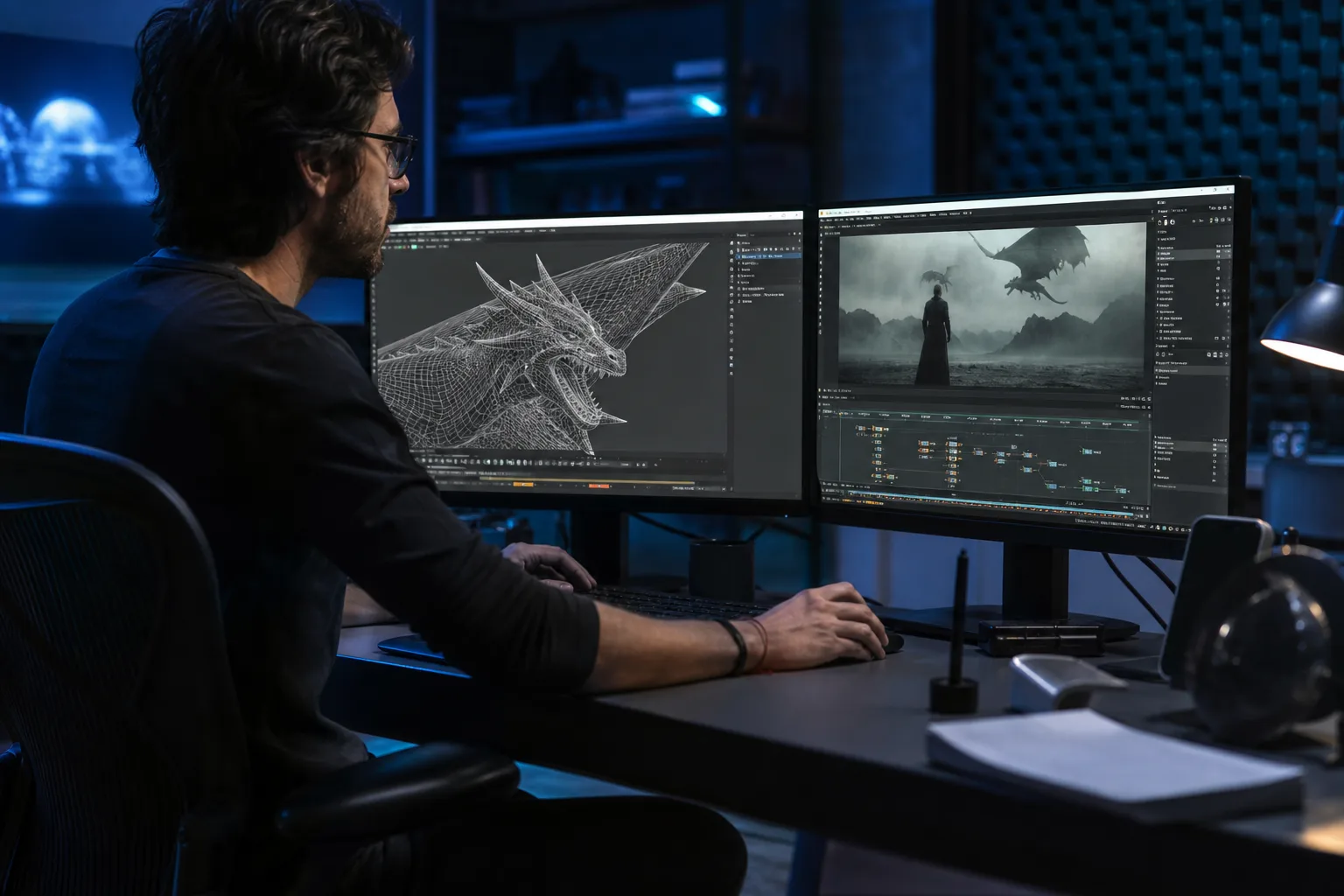
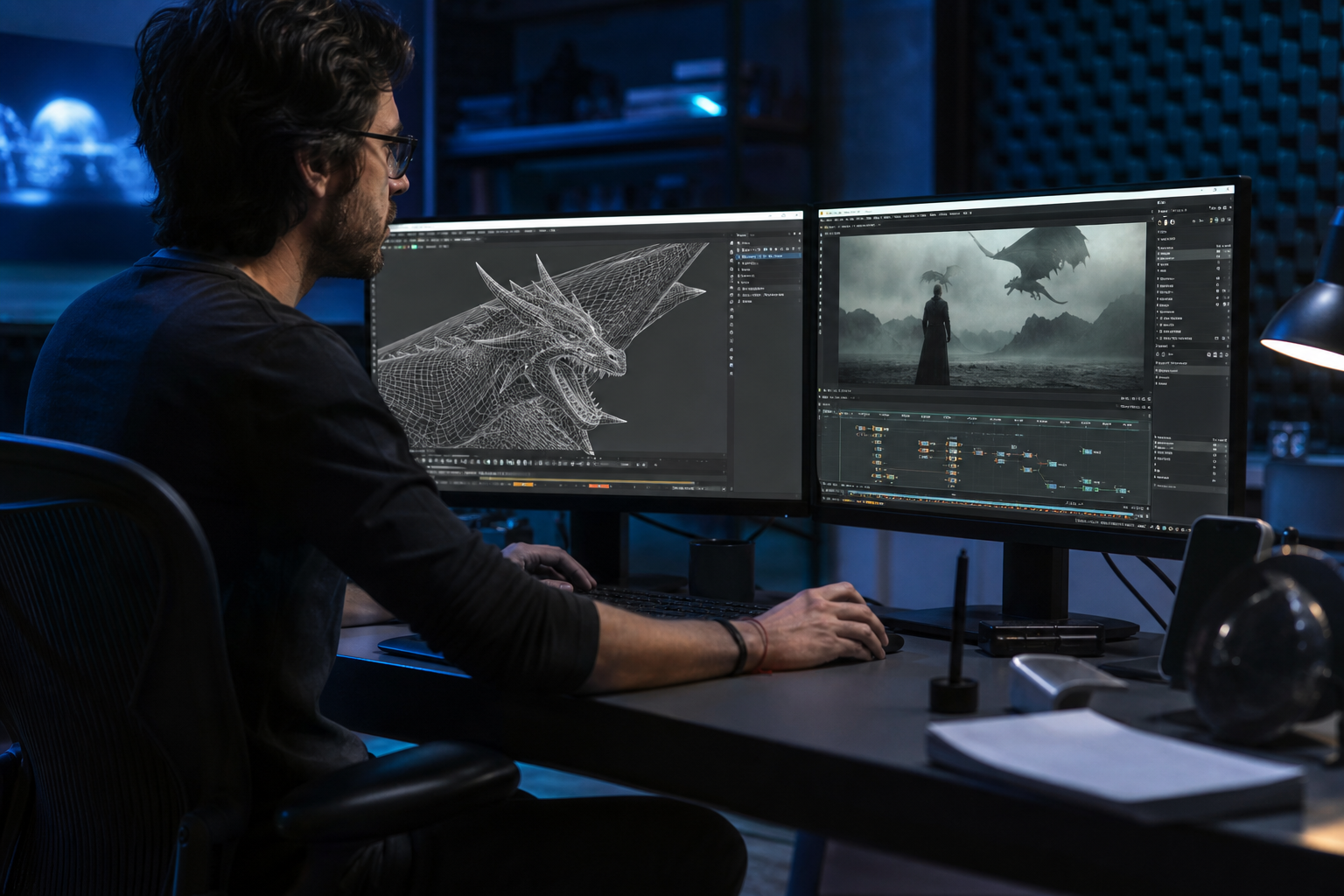
Computer-Generated Imagery has been the absolute backbone of the film, gaming, and commercial industries for decades. It is a highly structured, deliberate process driven entirely by human artists. When you see a hyper-realistic car in a commercial or a massive dragon in a fantasy movie, you are looking at countless hours of manual labor.

Unlike newer technologies, traditional 3D workflows demand an understanding of real-world physics, lighting, and spatial geometry. Artists do not simply ask the computer for a finished product. They must actively construct it from the ground up, piece by piece.

The Traditional 3D Workflow

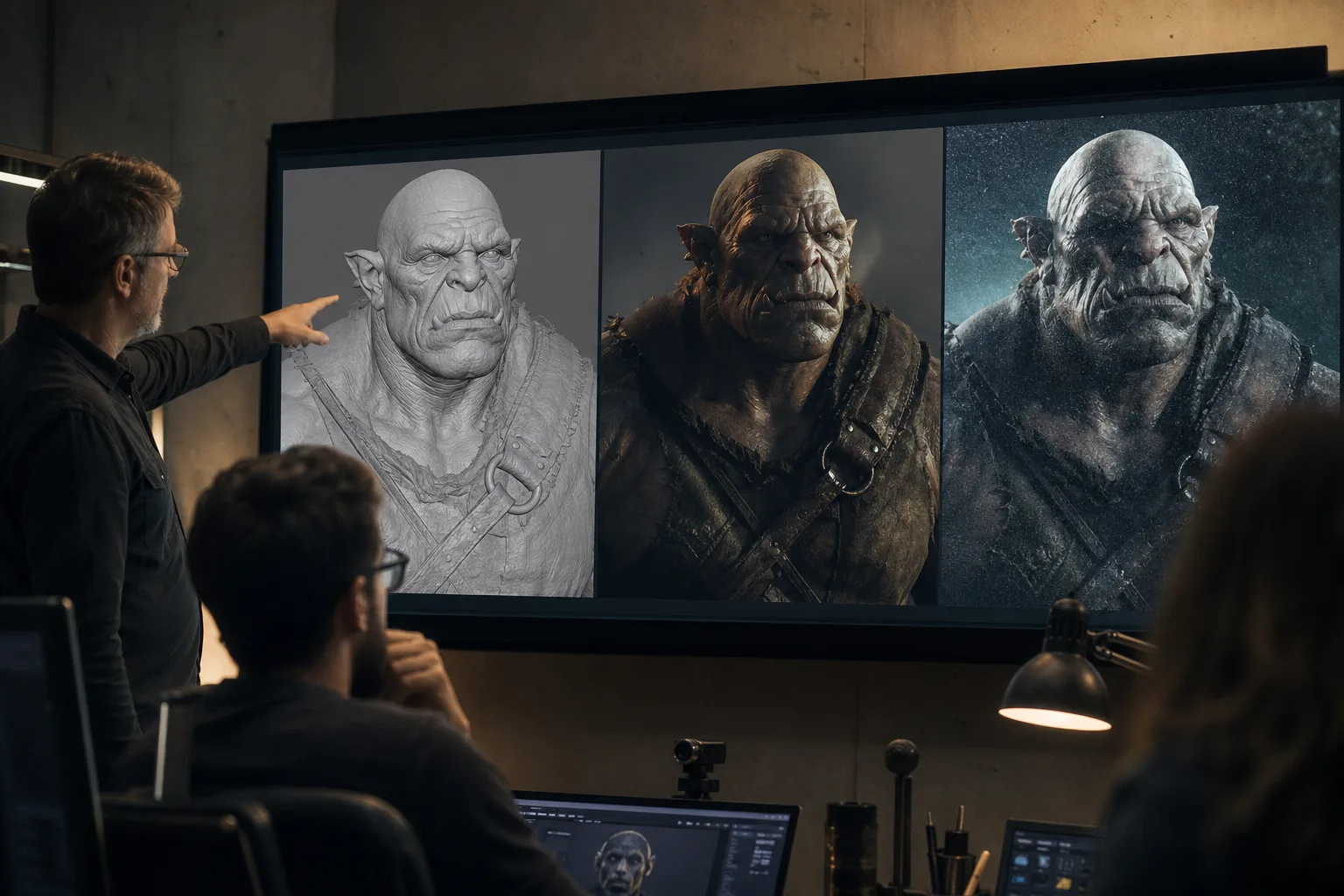
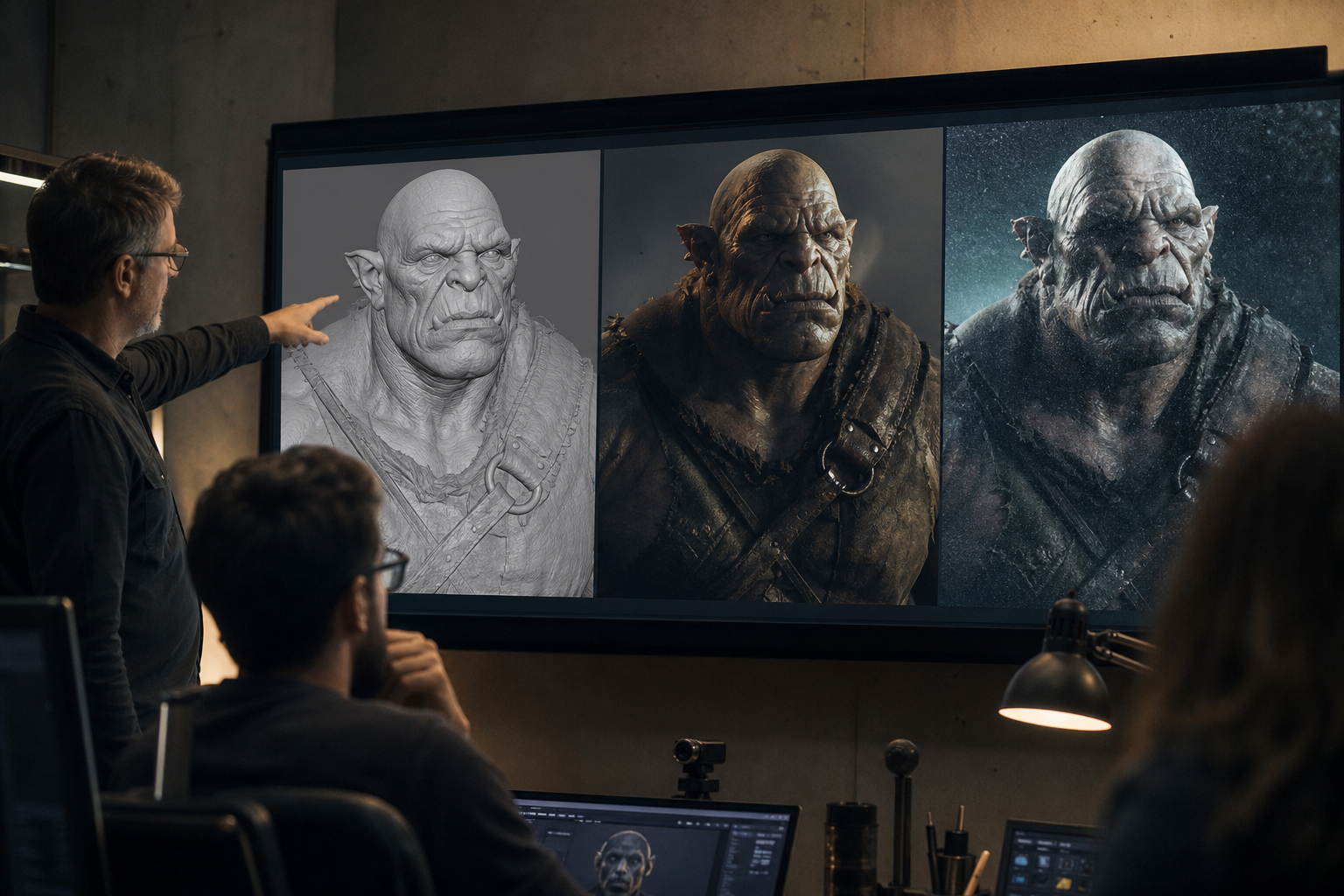
The creation process begins with 3D modeling, where an artist builds the underlying geometric mesh of an object. Think of this as constructing the wireframe skeleton of a building before any drywall goes up. Every curve, edge, and vertex is manually placed and adjusted.

Once the shape is built, the artist moves on to texturing and shading. This is where materials are assigned—telling the computer whether an object should react to light like brushed metal, soft cotton, or reflective glass. Finally, virtual lights are placed in the digital scene, and the computer calculates how the light bounces around in a process called rendering.

Tools of the Trade

To execute this work, professionals rely on heavy-duty, industry-standard software platforms. Programs like Blender, Autodesk Maya, and Cinema 4D dominate the market. These applications require a steep learning curve and significant technical expertise to master.

Mastering these tools gives the artist absolute, undeniable control. If a client wants the lighting shifted by exactly three degrees to the left, or the texture of a product to be 10% more glossy, the 3D artist can execute that change with mathematical precision.

What is AI Image Generation? Speed and Algorithmic Prediction

Artificial Intelligence takes a completely different approach to creating digital imagery. Instead of manually building a scene from scratch, the user provides a set of text instructions known as a prompt. The machine learning model then "predicts" and generates a visual output based on its vast training data.

This technology does not understand 3D space, lighting physics, or geometry in the way traditional software does. Instead, it recognizes incredibly complex patterns in pixels and attempts to recreate them based on your text input.

How Generative Models Work

Most modern visual AI relies on diffusion models. These algorithms were trained by looking at billions of image-text pairs across the internet. During generation, they start with a screen of random visual noise and slowly refine it—step by step—until it matches the description you provided.

Because the process is algorithmic rather than manual, the speed is unprecedented. What might take a 3D artist three days to model, light, and render, an AI can generate a highly detailed 2D approximation of in under thirty seconds. However, this speed comes at the heavy cost of direct control.

Leading Generative Platforms

The landscape of generative platforms is moving incredibly fast. Midjourney is widely considered the industry leader for artistic, highly stylized, and cinematic outputs. OpenAI's DALL-E focuses heavily on prompt adherence and understanding complex instructions.

Meanwhile, Stable Diffusion offers an open-source alternative that allows advanced users to train their own models and regain a small measure of the control that generative tools usually lack. Despite these advancements, getting the exact same result twice from a prompt is notoriously difficult.

Core Differences: Control vs. Speed

The fundamental divide between these two technologies comes down to the trade-off between absolute precision and rapid iteration. Understanding this trade-off is crucial for deciding which tool fits your specific project needs.

In traditional 3D workflows, the artist acts as an architect, sculptor, and lighting director all at once. If there is a flaw in the image, the artist knows exactly where in the pipeline it occurred and can manually fix it. The control is absolute and pixel-perfect.

The Hallucination Factor

Generative models, on the other hand, act more like highly skilled but somewhat unpredictable painters. They are fantastic at capturing vibes, lighting, and general aesthetics. However, because they lack an understanding of 3D logic, they frequently generate physical impossibilities.

This is commonly referred to as a "hallucination." You might generate an image of a beautiful luxury car, only to realize upon closer inspection that the wheels are slightly oval, or the reflections in the windows do not match the surrounding environment. Fixing these errors often requires taking the image into Photoshop for manual repair.

Time Investment and Revisions

Time investment is another major differentiator. Traditional modeling requires a massive upfront investment of time to build the assets. But once the 3D scene is built, changing the camera angle or swapping a color is relatively fast and perfectly consistent.

Generative tools require almost zero upfront time investment. You type a prompt and receive an image instantly. However, if a client asks to change the camera angle while keeping the exact same subject and lighting, the generative tool will struggle massively to maintain consistency.

When to Use CGI: Commercial and Technical Applications

There are several industries where the precision of traditional 3D modeling is absolutely non-negotiable. If you are working in a field that requires physical accuracy, brand compliance, or long-term asset reuse, manual creation is still the undisputed king.

If a product does not exist in the real world yet, but needs to be showcased in marketing materials, a 3D artist must build it according to exact CAD specifications.

Architectural Visualization

Architects and real estate developers rely heavily on 3D renderings to sell properties before they are built. These images must be dimensionally accurate to the millimeter. The lighting must reflect exactly how the sun will hit the building at 3:00 PM in October.

A generative model cannot be trusted to handle this. It might hallucinate an extra window, alter the proportions of the roof, or change the texture of the specific brick the architect chose. For architecture, precision is safety.

E-Commerce and Product Shots

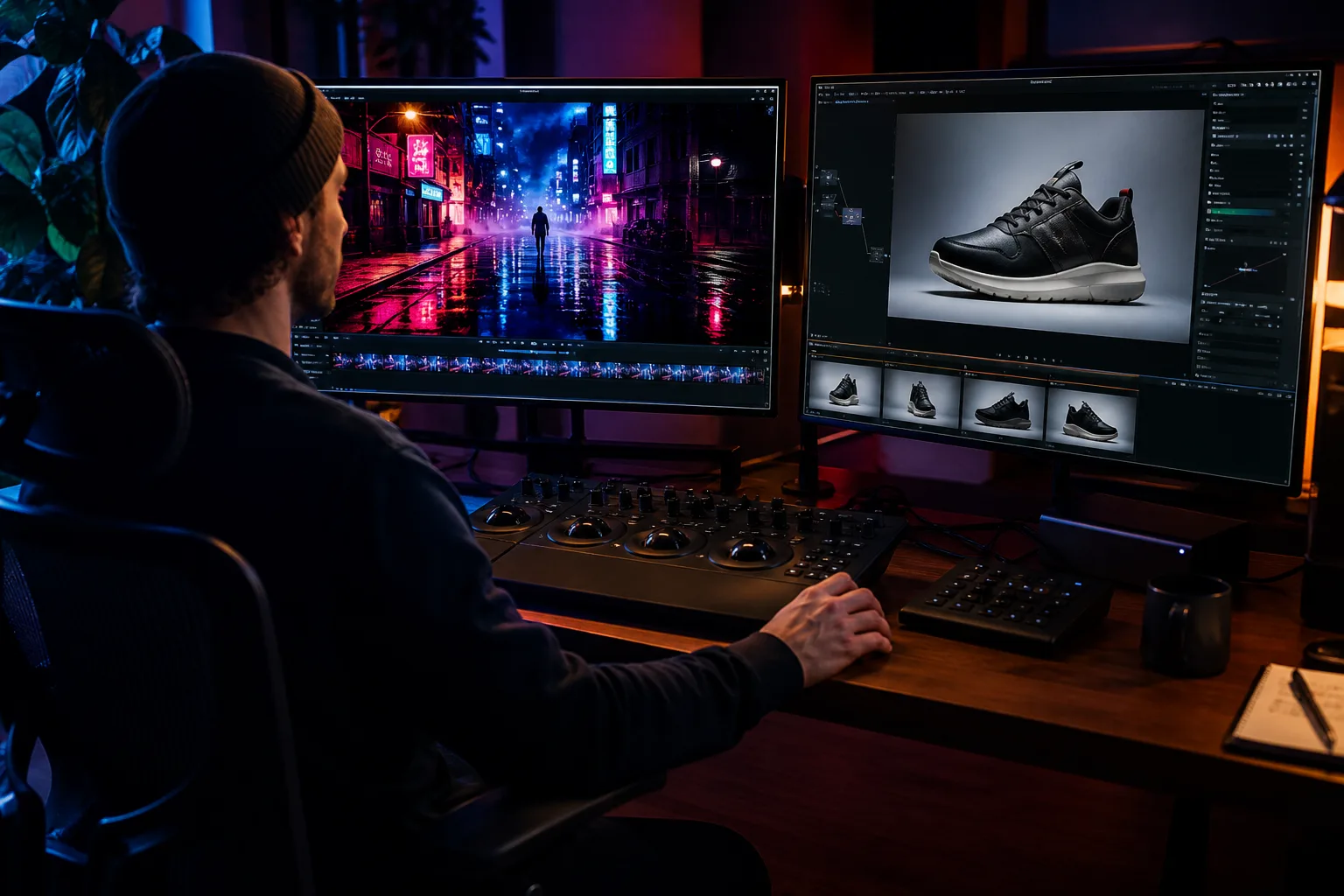
Major brands like Apple, IKEA, and Nike rarely use photography for their pristine product shots anymore. They use 3D renders. This allows them to create perfectly lit, dust-free, and infinitely reusable digital twins of their products.

Brands have incredibly strict guidelines regarding the exact hue, reflectiveness, and shape of their products. An algorithmic tool that relies on probability to place pixels simply cannot guarantee the extreme brand consistency required for high-end e-commerce.

When to Use AI: Ideation and Concept Art

While traditional 3D rules the world of final commercial execution, generative models have completely taken over the early stages of the creative process. If your goal is brainstorming, volume, or exploring aesthetic possibilities, these tools are unmatched.

Before committing days of expensive manual labor to building a 3D scene, creative directors can now generate dozens of visual concepts in minutes to align on a specific mood or direction.

Mood Boards and Concept Art

In the past, creating a mood board meant scouring Google Images or Pinterest for hours to find reference photos that sort of matched the vibe in your head. Now, you can type your exact vision into Midjourney and generate custom, bespoke reference images.

Concept artists use these outputs not as final products, but as highly sophisticated sketches. It allows teams to test out wild ideas—like "a futuristic city made entirely of carved wood in a cyberpunk style"—without spending forty hours modeling it just to see if it looks good.

Social Media and Content Marketing

For small businesses, bloggers, and social media managers, the sheer volume of content required to stay relevant online is exhausting. Generative imagery provides a massive advantage here.

When the stakes are relatively low—such as a thumbnail for a blog post or an engaging image for a LinkedIn update—the speed and cost-effectiveness of prompt-based generation far outweighs the need for pixel-perfect physical accuracy.

The Hybrid Future: Why Not Both?

The industry discourse has largely moved past the adversarial "CGI vs AI" debate. In professional pipelines today, it is no longer about choosing one or the other. It is about integrating the two into a powerful hybrid workflow.

Smart 3D artists are not running away from machine learning; they are adopting it to eliminate the most tedious parts of their jobs and drastically speed up their output.

AI as the Ultimate 3D Assistant

Instead of manually painting complex textures for a 3D model, an artist can now use a generative tool to instantly create a seamless, high-resolution texture map based on a prompt. Instead of rendering a massive, computationally expensive background environment, they can generate a 2D backdrop and place their 3D models in front of it.

This hybrid approach leverages the best of both worlds. The artist uses traditional 3D tools to establish a solid, dimensionally accurate base, ensuring the geometry and perspective are flawless. They then use machine learning tools to rapidly iterate on lighting, color grading, and environmental details, saving countless hours of rendering time.

Frequently Asked Questions

Can AI completely replace traditional CGI?

No, at least not in the foreseeable future. While generative tools are incredible at creating 2D approximations, they lack the spatial logic, consistency, and precision required for feature films, architectural CAD modeling, and high-end commercial product visualization.

Is 3D modeling harder to learn than prompting?

Yes, significantly harder. Learning software like Blender or Maya requires understanding lighting, geometry, material nodes, and rendering engines. Prompting a generative model is highly accessible, though mastering advanced prompting techniques still takes considerable practice and an eye for aesthetics.

Which option is cheaper for a small business?

For most standard marketing needs, generative tools are far cheaper. A subscription to Midjourney costs around $30 a month, allowing for thousands of images. Hiring a professional 3D artist to custom-model and render a scene can cost hundreds or thousands of dollars per project.

Can I use AI to create 3D models?

The technology is emerging rapidly. Tools now exist that can generate basic 3D meshes from text prompts or 2D images. However, these generated models currently lack the clean topology and optimized structure required for professional animation or gaming, often requiring heavy manual clean-up.

Do AI-generated images have copyright protection?

In many jurisdictions, including the US, images generated entirely by a machine without significant human creative input currently cannot be copyrighted. Traditional 3D renders, however, are fully protected as they are the direct result of manual human authorship.